

LET’S GET DOWN TO BUSINESS!!
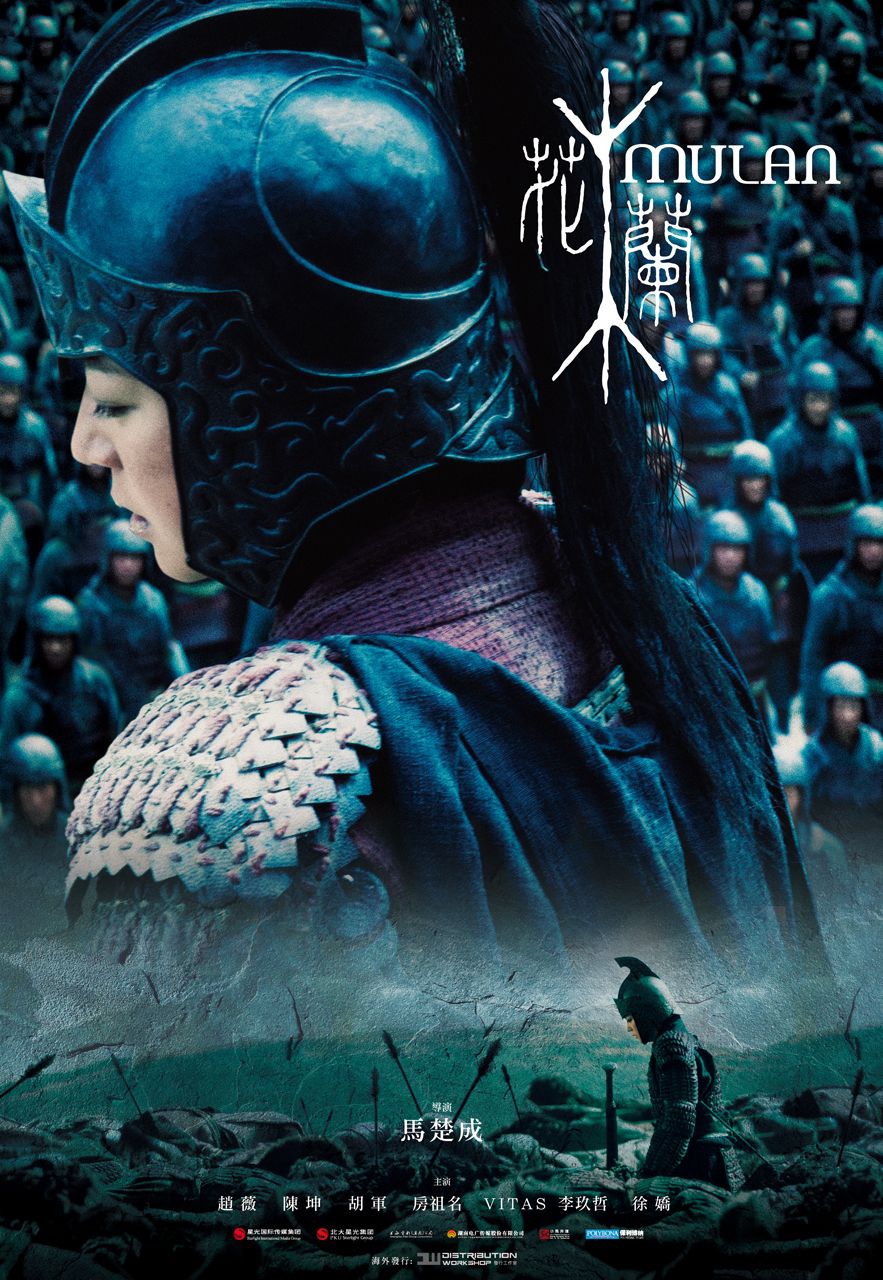
Available on Amazon, but dubbed. Subbed version is on…the internet. Approximately 114 minutes.
This entry is going to be a little different from the usual WTF ASIA blog in two ways. This is one of those rare times where I spoil the whole movie. It is kind of necessary this time because of a certain Disney film. Also, aside from the time that I handed the reins over to Future Ex-Mrs. Malcolm, all of the movies here are movies that I either love or really like. I do not particularly like this movie all that much. I don’t hate it by any means, and I have certainly featured movies that are objectively worse, but it is only okay in my opinion. I cannot say how well this was received in its native country, so I can only give my opinion on it, which is that it is highly flawed. However, while I have major problems with the storyline, there are themes that I feel that this film (which goes by many titles, but Mulan was the shortest) displays better than most other films that I have seen. Additionally, there is a message that I don’t think that I have ever seen in a Western film. Anyways, this post is going to be really long, so I had better start.
The film on the northern border of inner China where, once upon a time, there was a confederation of nomadic tribes called the Rouran. The leader of the confederation, Danyu, has joined the major tribes together to plunder the Southern Plains once again. His son, Mendu, thinks that it would be better to take advantage of the combined forces of the tribes to take over the farmlands of Wei, killing whomever they please.

In a village far away, we first see Hua Mulan bringing medicine to her sick father, and we immediately see her doing something sneaky in order to do what must be done, tricking her sick father into drinking his medicine instead of wine. His friends laugh at him, saying that her tactical mind and her fighting skills will never land her a husband and it is his fault for teaching her that stuff in the first place.

Soon afterwards, Wei soldiers arrive at the village, warning that the Rouran are at the border and that all military families must contribute a man to the army. As the Hua family is a military family and Mulan has no brothers, so it is her father’s duty to go. At least he doesn’t say anything about honor, since not all Asians use that word forty times a day. I’m looking at you, Zuko. Anyways, that night, he tells Mulan that a matchmaker has found a husband for her and that she is not to practice martial arts anymore. He pretty much tells her that he is going to die and be reunited with her mother. I am going to note right now that the mother in the Rouran family is most likely long dead as well. Man, why didn’t the Disney version have Mulan’s mother be dead like in other Disney movies? They really dropped the ball there.
The next morning, Mulan has left with a horse, her father’s army uniform, and his sword. She arrives at the army camp, where someone is reciting all of the possible violations that will result in execution. One of which is bringing a woman into the camp. I guess that it still counts if you bring yourself. Almost immediately, she is spotted by Tiger, one of the boys from her village who had arrived at the camp a little before she did. Mulan in his sights, he gets her alone and quietly panics. But he takes a step back and reluctantly agrees to keep her secret, as long as she follows his advice on seeming more masculine. Which…sure…She also meets Wentai, a low-ranking officer, and introduces him to the people in her tent. When “Turtle”, Prince Regent and the nephew of the commander, starts to bully one of the other enlisted men for crying over his sick mother, Mulan shows off her fighting skills on “Turtle”, impressing Wentai and the others in the tent.

The following night, Mulan goes to bathe in a hot spring, but Wentai is there as well (how did she not notice him?) and he finds her. Unable to hide without drowning, she runs off before he can see who she is, but he realizes that there is a woman in the camp. Before he can do anything about it, it is discovered that someone took Turtle’s jade belt pendant during training. It was actually Tiger, who had kicked it into the water out of spite. Since Tiger pretends he doesn’t know that he’s the reason why the pendant is gone and he cannot return it, everyone has to strip down. If Mulan is found out to be a woman, not only will she be executed, but her father will be killed as well. Mulan confesses to the theft, claiming to have forgotten where she put it. She will still be executed for the theft, but there is a slight chance that Tiger could burn her body before she is found to be a woman. Wentai manages to hold off the execution until the next morning while he “investigates” the matter and Tiger searches in vain in the river.

Mulan wakes up the next morning just as Wentai relieves the guard and frees her, saying that the camp is under attack. He leads her to a horse and tells her to run away, saying that there are not so many consequences in war. Mulan, however, does not run away. She enters the battle on the horse and in full uniform, fighting off groups of Rouran on her own. Wentai points her to the Rouran general and she attacks him. She gets the general on the ground, but is reluctant to kill him now that he is helpless. Wentai yells at her to kill the general, saying that that is the rule. So she chops his head off. No avalanche, no rocket to nowhere; she chops his head off. This boosts the morale of the Wei troops and causes the Rouran to flee. However, the Wei Commander is also dead and nephew Turtle in particular is in mourning. At this point, it is safe to assume that the issue with the pendant is forgotten.

As the rest of the troops commemorate the Commander at his funeral pyre, Wentai and Mulan talk privately elsewhere by the river. As he washes the blood from the ID tags of the dead, Wentai says that Mulan could make a great general if she stays and can keep her secret. He says that he is actually afraid of blood and that his father had kicked him out of the house for his timidity. Mulan says that it was not that he was afraid, just that he could not bear to kill. Wentai agrees and says that he worked hard to show his father wrong. He used to hate his father, but eventually realized that it was all training to make him overcome his fears.

With the death of the commander, Wentai has been promoted to battalion commander, with Mulan as sub-commander. I am not exactly sure how Mulan transitioned so quickly from almost being executed to attaining a leadership position merely due to combat prowess, but I guess that that is what you get for killing an enemy general. They lead the 6th Battalion through many victories, but also lose many men in the process. As the war progresses, Wentai is made General of Conquering North and Mulan is made General of Pacifying North. All the while, she personally collects ID tags of the dead soldiers. One night, as she and Wentai are hanging up the ID tags together, she recalls how her father said that there must not be feelings on the battlefield. She says that, while she and Wentai have been rewarded as generals for fighting, no one rewards the dead. Don’t their families get something?

The names of Mulan and Wentai reach Danyu. Danyu starts to realize that the Wei is fiercer than he had thought, and seems to be considering giving up his attacks. Mendu pleads with him to stay the course. Later on, Danyu tells his daughter that there are fewer Rouran than there were when the Rouran nation was established and it is a hard life for his people. His daughter (I don’t think that we actually hear her name) says that she wishes to be Queen of Wei, and that she could bring peace, friendship, and trade between the two peoples. Danyu openly says that it is a pity that she has an older brother or else she could have been the next Danyu.

While transporting supplies, Mulan learns that Wentai has been ambushed, but has ordered her to stay where she is with the supplies. Instead, she tells a few men to guard the supplies while she takes her group of cavalrymen to help Wentai. Mulan arrives to see that Wentai’s men have already routed the Rouran. They return to the supply train to see that everyone is dead, including one of her old friends from the tent. Mulan has vengeance in her heart, but quickly realizes that the blame is on her for getting her men killed out of fear of losing Wentai. That said, I am not sure exactly how she and her small group of troops would have made that much of a difference in what happened. In any case Wentai is furious at her surrendering to her emotions (heh), saying that he would not have gone after her if the roles were reversed. Later, when Mulan says that she wants to give up being a general and just be normal, Wentai says that he does not want to fight either and would have given his life a long time ago if his death could have stopped the fighting. But he says that neither of them have a choice in the matter and that, now that they are generals, their lives are not simply their own. I am going to say right not, I have no idea how many soldiers they have at their disposal, but it should probably be much more than the number that are on the screen.

One day, Wentai is killed in battle. Mulan is now a general, but has pretty much broken down. She does pretty much nothing but mope and drink herself to sleep. Leaderless, the troops stop their with training and just sit around all day. Since relieving Mulan of command was, apparently, not an option, this continues until Tiger gets fed up and yells at Mulan to pull herself together. Even drunk, she is still able to overpower him, but his words eventually get to her.

This causes her to break out of her funk. She puts on her uniform and addresses her troops. She admits to her fears and her guilt over losing so many men, but promises to become stronger and protect all of who are left. She tells them that they must be stronger too and protect each other. She is now able to lead them on her own and they are able to follow him on their own.

Tiger is delighted and goes to tell Wentai the good ne…what? Wentai is alive?

Yep, he was right there all along. Wentai was badly wounded in the ambush, but ordered Tiger to say that he died whether he did or not. And he did not. I know that he is a general and all, but does this not count as abandoning one’s post or something? Isn’t faking one’s death a serious offense for a soldier? It wasn’t enough that they constantly mansplain to her and berate her, but they also join forces to play this huge mind trick on her? Well…anyways…Wentai tells Tiger to keep the secret from Mulan, so he does. Well, the joke is on her, since Mulan successfully leads her men into battle again and again on her own, sometimes with no loss of life. This reaches the higher ups, one of whom is feeling envious.

Mulan’s successes are also demoralizing the Rourans and a few of the tribe leaders are thinking of abandoning the mission. Mendu demands that they stay, but Danyu has allowed them to leave. Mendu kills one of the leaders and threatens the rest. He goes to talk with Danyu, who says that he understands why Mendu is unsatisfied with the status quo of annual looting, but that continuing the mission is too risky and morale is too low. Mendu stabs Danyu in the heart. Now Mendu is Danyu. And the mission of conquest continues. His sister is furious, but the new Danyu does not care. He says that they must wed soon to keep the royal bloodline pure. Lovely. A character called Dany and sibling incest? How come this movie doesn’t have any tiny fire-breathing dragons? Oh, right. Chinese dragons are traditionally water-based. Well, that is one plot point that would not work.

When the Wei Commander-in-chief learns about the new Danyu bringing 200,000 troops to conquer Wei, he asks his generals what to do. One general suggests pulling back and taking a defensive position. Mulan argues that that will hurt morale. She asks to lead a group of 20,000 to the frontlines and act as bait in a trap that I still do not quite understand, but involves a canyon and a larger force led by someone else. She leads them out to the frontlines and…honestly…it looks to be around 4,000 at most. Even if there were others hiding elsewhere, then it would still be 8,000 at most. Just in case I was not clear about this earlier, this movie has a bit of a problem with scale regarding how many Wei soldiers there are supposed to be in one place at any given time. On the other hand, there looks to be thousands upon thousands of Rouran. I don’t know about 200,000, but certainly a lot more than 4,000 by the way that the movie frames them.

The Wei troops hold their own during the first skirmish. The first group of 40,000 Rouran retreats, but Danyu mobilizes all of the troops to attack. Mulan and the main body of the troops retreat into a canyon while a small group of soldiers covers the retreat. A sandstorm creates chaos, making it impossible to see and sending people flying. When the sandstorm clears, Wentai wanders around, screaming for Mulan. He eventually finds her lying on the cold hard ground with an arrow through her shoulder and another through her ribcage. She says that she knew that he didn’t die. Well, that’s the end of that plot thread, I guess. She, again orders a company retreat before fainting. Tiger and a group of injured soldiers cover the retreat.

Danyu brings his troops towards the entrance of the canyon, but does not engage the Wei guards, preferring to wait them out. Unfortunately for Mulan, the sandstorm had taken most of the supplies, including medical supplies. With no food or water, the soldiers have to kill the horses (don’t worry, we don’t see it, but I would not be surprised if tripwires were used in the battle scenes). They wait in the canyon for days and it becomes clear that the Commander-in-Chief and the larger force are not coming. Well, shame on him.
And here we come to the scene that is the main reason why I decided to include this film in this series. The Rouran had managed to capture the team that covered the retreat. They bring the group to the mouth of canyon and torture them in plain view of the other Wei soldiers. Turtle begs for Mulan to order a rescue, pointing at Tiger in the front. After being yelled at multiple times earlier in the movie for losing many soldiers while trying to save a few soldiers, Mulan recognizes on her own that this is a trap and refuses to take the bait. Turtle runs out on his own and quickly gets cut down by Rouran arrows. Mulan starts singing a pretty depressing song about the life of a solder, the same one sung at the original commander’s funeral. Wentai joins in and soon all of the Wei soldiers are singing, including the captured soldiers. Most of the latter had been kneeling over and about to die, but sit up as they being singing. It’s not quite “A Girl Worth Fighting For”, but it will have to do. Danyu orders all of the captured soldiers to be killed, and they are cut down while they are still singing. Like a bunch of heroes. Tiger is one of the last to die. Yep, instead of leaving no man behind, Mulan deliberately and strategically let her best friend and a whole bunch of other men under her command get slaughtered in front of her for the greater good.

Mulan, about as healed as she is going to be, addresses the troops. She openly states that the Commander-in-Chief has betrayed them and has left them all to die. She tells them that they must fight anyways. Even if others betray her, she will never betray her country. However, it becomes clear after that big speech that she has not fully recovered, so Wentai leaves the canyon on his own and demands to see Danyu.
Wentai presents himself as Hong, the seventh son of the Wei Emperor and offers himself as a hostage in exchange for a Rouran retreat and supplies for the Wei…t a minute. He is a PRINCE??? Was this known? Did no one else know? Was he that big of a pariah that his “death” would not have reached his father? And if he was that big of a pariah, then would his capture mean anything to the Emperor? Was his being a prince the reason why he was not executed for faking his death? Was Mulan the only one kept in the dark about Wentai and his condition? Am I missing something here or is there some really important piece of information missing from this story?

Anyways, Mulan eventually recovers and decides to go off alone to rescue…the prince. She orders her second-in-command to send the rest of the troops home when they have recovered. She takes her horse (which she was going to kill earlier, but was talked out of) and rides off to find the Rouran camp. She eventually makes her way there, disguised in Rouran garb.
Inside Danyu’s tent, Danyu asks Wentai how much gold he could get for ransom. Wentai claims that his father doesn’t care enough for him to pay anything, but Danyu doesn’t believe that. So…maybe Wentai simply fooled Danyu into thinking that taking him as a hostage would benefit the Rouran in order to give the Wei troops time to escape. Whatever. He then tells Danyu that ruling through fear and violence will simply lead to more people rising in resistance. This seems to inspire the Princess, who offers a bit of food to Wentai and then defies her brother right in front of everyone in the tent, including Wentai. Mulan also overhears her.

That night, Mulan sneaks into the Princess’ tent somehow and introduces herself as General Hua Mulan. She says that she has overheard the Princess talking about wanting peace between Wei and the Rouran. The Princess does not give much weight to her own statements, given that she is merely a woman. Mulan says that she is also a woman. The Princess is amazed that…okay, really?

I was going to hold off on this until I got to the end of the movie, but this is getting a bit too hard to ignore. There were several Chinese actresses who were considered for this role, including Liu Yifei, who will be playing her in the upcoming Disney movie. Ultimately, the role went to Zhao Wei. She has played tomboy characters in various films. In the Red Cliff movies, she pretended to be a male soldier and donned an outfit similar to the one that she wore in the beginning of this movie. While it was a stretch to say that she looked like a guy, one could say that she could get away with looking like a boy as long as she remained relatively unobtrusive. That goes out the window in this movie once she kills the Rouran general during the raid on the Wei camp. And this story is supposed to span over twelve years, so she is supposed to be inching towards thirty-years-old at the very least. She does nothing to hide her voice and she looks like Zhao Wei.
It is one thing to argue that the other troops know fully that she is a woman, but say nothing about it due to it being like an “Emperor Has No Clothes” scenario that could end with all of them being executed. That is fine. In fact, her being a woman had not really been a plot-related issue since the raid on the Wei camp until this scene with the Princess, and the early sense of dread has long since dissipated. However, neither Danyu nor the Princess remark on her very very female-sounding voice or anything, and they have nothing to lose by pointing that out. Could it be that they simply envision all Wei men as being effeminate? Was it the clothes? And then, after all that, her revealing herself to be a woman is just her saying so and showing off her hair. Everyone not bald had long hair. Her pretending to be a man was rarely played for comic effect, so I am not sure what people were going with. I guess that, perhaps, the mere idea of a woman pretending to be a man and rising through the ranks of the military was so farfetched that everyone, including the Rouran, could not even imagine it. Well, everyone except for Mulan, Tiger, and Wentai. So, where was I? Right, Mulan and the Princess. By the way, Mulan is not a princess. Not even to her father.
Mulan tells her story to the Princess, talking about how she joined the army simply to save her father and did not expect to amount to much, let alone kill so many people. She confesses to being haunted by a lot of her actions and to not being at peace. She tells the Princess that only confronting the cause of the war can the war end. The cause, of course, is her brother.
Speaking of which, Danyu tells Wentai that the Emperor has agreed to all of the Rouran demands (whatever they were) and states that he must have loved Wentai very much. Danyu orders a three-day celebration. The Princess comes in and agrees to the wedding. Unknown to him, the Princess has conspired with some of the guards to stage a coup. Mulan sneaks into the tent disguised as a serving girl and the guards close the entrance. Mulan attacks Danyu and, after a fight, she kills him, though not before revealing herself as the General. Now, the Princess is Danyu, ruler of the Rouran.

The Emperor says that the Commander-in-Chief was a coward and has been dealt with somehow. Like any good scapegoat, he is long gone and not to be talked about anymore. The Emperor says that Mulan is now Commander in-Chief. Mulan declines, saying that she has been unable to take care of her father during the twelve years that she was gone. She also says that she is a woman and asks for punishment. The Emperor says that it is the nation’s greatest fortune to have a woman like her, and that he has long since forgiven her. How long has he known? How long has everyone known? Well, fine. Her crime of being a woman has been forgiven. Everyone knew, just as everyone knew that Wentai had faked his death. Well, with that pesky little issue of gender politics out of the way, the Emperor announces that Wentai will marry the Danyu, ending the war and establishing friendship between the two nations. With the outsiders pacified through top-down negotiations and the People’s Republic of China Wei Empire secure in its territorial sovereignty and dominion, all is right and peace is restored. Neither Mulan, nor Wentai seem happy with this arrangement, but I am guessing that this was Mulan’s idea in the first place. I guess that the Danyu is happy with this, since she will become Queen of Wei, but what would she have done if the wedding was not to happen? Would she lead the Rouran into battle? Does the Emperor believe that she would try? What would she gain from that even if she could do that?

Finally, after twelve years of war, Mulan returns to her village, the only place in this movie where people have aged. It seems as if the villagers have already dealt with the fact that that tomboy girl who disappeared all those years ago has become a heroic general. She runs to see her father, who older and still sick. She walks him back to his hut, and he smiles.

One day, Wentai comes to the village to see Mulan. He asks her to run away with him. To anywhere. She reminds him that he once said that he would give his life to end the war. He says that giving up his life is easier than giving up her, but she says he has to in order to end the killing. I guess that that also means that he could not have made her his most favored side chick. They embrace. He tells her to forget about him, but she says that she has dreamt of him for twelve years and will continue to do so. Then he moves on. And the movie ends.

Phew…Okay. So, that was the movie. Now, you can see that I had some problems with the movie. There were actually some other issues that I had that I will not bother mentioning here. That said, I mentioned at the beginning that I felt that this was worthy of discussion if only because of some of the themes that it brought up. Oddly enough, gender politics do not really enter into the movie; being raised briefly in the beginning, brushed aside as soon as possible, and then simply dismissed at the end as if they were nothing. Anyone looking for some sort of female empowerment story will be very frustrated, with a possible interpretation being that she has to overcome her irrational womanly emotions and softness in order to fulfill her duty…and suffer for it. While that can be kind of problematic, the movie appropriates the fable of Mulan (yes, the story existed before 1998 and there have been many versions of it put to screen, which is probably why this movie was confident enough to skip through the narrative so much) to send a message. Getting mired in such tangential topics would raise some questions about the current state of gender roles and inequality in the PRC that would get in the way of that message. So, what are the themes of the movie that stuck out for me?
The first is one of leadership. The movie seems to suggest that a group of people is only as good as its leader. That is hardly a novel idea, but it is rooted in Confucian teaching here. We have several examples of leadership in the movie. The original Commander is not seen much, but he is a bit of a hard man and his nephew, Turtle, is a bully. We never see whether the Commander is a good military leader, but the fact that he dies during the first battle suggests that is not anymore. Wentai and Mulan prove themselves in that battle and are promoted to Commanding position, which makes Turtle a better person and makes Tiger, who was kind of lazy and effeminate (not saying that that is a bad thing, but he really was) in the beginning, more disciplined and hardened. Now, this theme of leadership is slightly undermined in the beginning by the movie not showing Mulan displaying any actual military leadership qualities before being promoted and then showing almost all of her early decisions as leader resulting in disaster and her getting scolded at by either Wentai or Tiger. When Wentai “dies” and Mulan falls apart, the army falls apart. When she is able to pull herself together (thanks to Tiger manyelling at her) the army pulls itself together. And only then does she start to show why she deserved her leadership role. She inspires her through example and love. She does not so much recover from her anguish as much as she learns to cope, and I guess that the same goes for the army. And when the Commander-in-Chief betrays her, does she vow revenge and lead a mutiny against him? No…well, maybe she does; the story kind of glosses over his fate, with the Emperor disappearing him. Anyways, even amongst the Rouran, we see good leadership from the old Danyu, who has the respect of the tribes and even the loyalty of a Russian slave (whom I had not mentioned earlier, but plays a pretty prominent role and is actually the first character on screen) whom he had freed years ago. It is only Mendu who forces the war and the death on all sides. He encourages cruelty amongst his troops and that is what his troops provide. He kills his father alone, but his sister has co-conspirators in her coup. So, already, she has evidence of a leader worth following, if only until she gets married.
Another theme is one of family. Sure, women were not supposed to fight, but Mulan’s deception was all for her father. Sometimes duties clash and you have no time to decide which has priority. There was barely any thought about it; no talk of honor or exposition about filial piety. She just did it. And she kept on with it for years, not for glory, but for her father. Eventually, the army became her family, and she did everything for them. As her position grew, so did her sense of responsibility. The other soldiers may have called her brother, but she was sort of a parental-figure to them. Wentai originally did his best to prove his father wrong about him, but eventually started doing it in order to live up to his father’s reputation. On the other side, the old Danyu was a father to his people, and he mourned what he saw to be their slow decline. When Mendu killed him, it was a gross violation, and his time as leader did not last long. So, you know…any sort of shakeup to the natural order is bad…ahem…
A third theme is of doing the best in one’s job. On the side of the Wei, there are only a few characters who seem to genuinely love being in the army or fighting anyone. They do it because they have to, either for familial obligations or simply for the nation. The focus of the movie is on Mulan and Wentai not just because they are the romantic pair that never was, but because they epitomize the combination of skill and obligation in an occupation. Mulan may love martial arts, but there is a fine line between kicking someone in the ribs and chopping someone’s head off. Wentai seems to be even worse off in that regard. Yet, they strive and achieve, not because they want to, but because they have to. Sometimes, success is its own reward, but sometimes it is not. In the case of Mulan, all victories come at a high cost. It may not seem worth it, but it is always necessary. This is the exact opposite of doing your best at the thing that you love the most; this is doing your best at something that you absolutely hate doing and achieving something great that may benefit you only slightly. Maybe you will learn to love this thing that you hated or maybe you will always hate it. What is important is this: if you can dedicate so much effort and develop so much skill in performing something that hate, how much easier will it be to transfer such disciplined behavior into doing something that you love when you finally get the chance? The movie ends before we see what Mulan really loves to do, but I am guessing that she comes home a better martial artist than she was when she left twelve years earlier.
A fourth theme, and the most interesting one to me, is the value of human life in defense of nation. Many Western movies that have dealt with Asian military forces portray the Asian force as a massive horde whose members have no respect for human life, least of all their own lives. Even South Korean films sometimes portray the Chinese as that. I guess that it is easy to do to a country that has over a billion people. This movie shows that sentiment from the other side. The soldiers have great camaraderie and they do mourn deaths greatly, but they have to put that aside in order to defend their country. There have been many Chinese movies during the past couple of decades that have basically amounted to nationalistic and pro-authority propaganda and this movie could be seen as one of those. What sets this one apart from most of the others is that it shows the dark side of such patriotism; that it requires suffering and sacrifice, and that that sacrifice is not necessarily of your own life. It is like that ethics question where you have to choose between saving one important thing and saving this other important thing. In this case, the things are your nation and your friend. And, in this case, the right answer is letting your friend die.

Patriotic movies, both Western and Asian, may show sequences where their heroes are mourning and brought down low. This movie seems to be two-thirds that. The characters in this movie may initially seem like they are arrogantly playful or high-mindedly stoic, but the overriding emotion is sadness. Mulan seems to be suffering from mild forms of PTSD even after the first battle. And while she does not always succumb to it, it never seems to go away. She can hide it from the leadership, but she cannot hide it from her troops; so she doesn’t try to. She reveals to them that she is frightened and miserable. But she forces herself to function because she has to. She forces herself to lead her soldiers into further terror because she has to, and her frightened miserable soldiers follow her because they have to. It is what is done. As long as their presence on the battlefield is not a net negative, they have to contribute despite being physically or psychologically broken.
We see only a little of Mulan’s life before she joins up in the army, but it is clear that what she becomes is not what she was. While always a tomboy, she had to hide her identity as a woman and live as a man almost consistently for twelve years. This movie shows how much people have to harden their hearts and go against their emotions, give up their dreams, watch their friends die, and let the ones whom they love marry someone else. They do not die gloriously; nobody dies gloriously, just horribly and with much suffering. Those who are still physically alive bury their souls deep inside themselves for years and often wish for death, either for escape or to save others. But they cannot just die, not if they are still of more use alive. They die only when it best serves the cause, not when they are fed up with life. Similarly, they try to save their comrades if they can, but allow them to die if necessary. They hate what they have to do, but it is what they have to do. They are hardly brainwashed or heartless automatons. They are no less troubled about their actions than Jack Bauer is, but they do it with gusto until they no longer have to. There is no talk about fighting for freedom or liberty or glory or even justice; there is only fighting for family, brotherhood, community, country, and duty. And the ruler: whether that ruler by the Emperor of Wei, Hu Jintao, Xi Jinping, or…still Xi Jinping. And if any of those pillars of your loyalty fail you or betray you, then so be it, but you still have your duty. This is what true patriotism does to you. This is not good, but this is necessary for what is right. This is the way. There is no other. So they accept this way with deep sadness, but with deeper resolve.
It may be a bit of an exaggeration, but Western movies about war seem to tend to fall into either the category of war movie or anti-war movie. Mulan seems to be in another category: the anti-anti-war movie. It takes a lot of the tropes of anti-war movies and spits them back. Yes, war is horrible. Yes, good people should never want war. Yes, war makes good people do horrible things to good people. Yes, it turns the pure-hearted into cold killing machines. Yes, war breaks the soul. Yes, war rewards the cruel. Yes, war destroys the innocent. Yes, war is inherently unfair. Yes, war is misery. Yes, war brings unending suffering. Yes, war is insane. Yes, war is traumatic. Yes, it causes irreparable psychological damage. Yes, war is undeniably evil at its very core. War is an all-encompassing Hell from which there is no escape, means to defeat, or means to cope. Yes, war is to be avoided whenever possible. But when war is imminent, we must embrace it. We must be ready at all times to embrace it with passionate zeal. Because when war is necessary, it is worth it. Yes, it is worth it. A billion times, yes. Do I agree with this? A trillion times NO. At the same time, that makes seeing this on screen all the more fascinating to me. And, despite every problem that I have with the movie, I find it endlessly compelling.

As I said before, I don’t particularly like this movie as a movie, but there is just something about it that I cannot dismiss. It combines elements from two different types of war films to tell a story of comrades in arms in a way that I have never seen before. It is because it is so disturbing and depressing that I find it so interesting. It takes something that I find completely alien, and makes me relate and empathize. It does something to me that so few films have done to me. So, while I do not really like it…and while I make no guarantees that you will like it at all, I still recommend it.
That said, if you want to see a less mopey war movie where Zhao Wei dresses up as a man and gets to do her own thing for a while with less mansplaining, then the two-part Red Cliff movies might be the way to go.
WTF ASIA 67: The Man from Nowhere (South Korea: 2010, approx. 119 minutes)
Available in Australia, Canada, the United Kingdom, the United States, and maybe some other countries.
WTF ASIA 68: Kahaani (India: approx. 2012, approx. 122 minutes)
Available in Australia, Canada, the United Kingdom, the United States, and maybe some other countries.
You must be logged in to post a comment.