
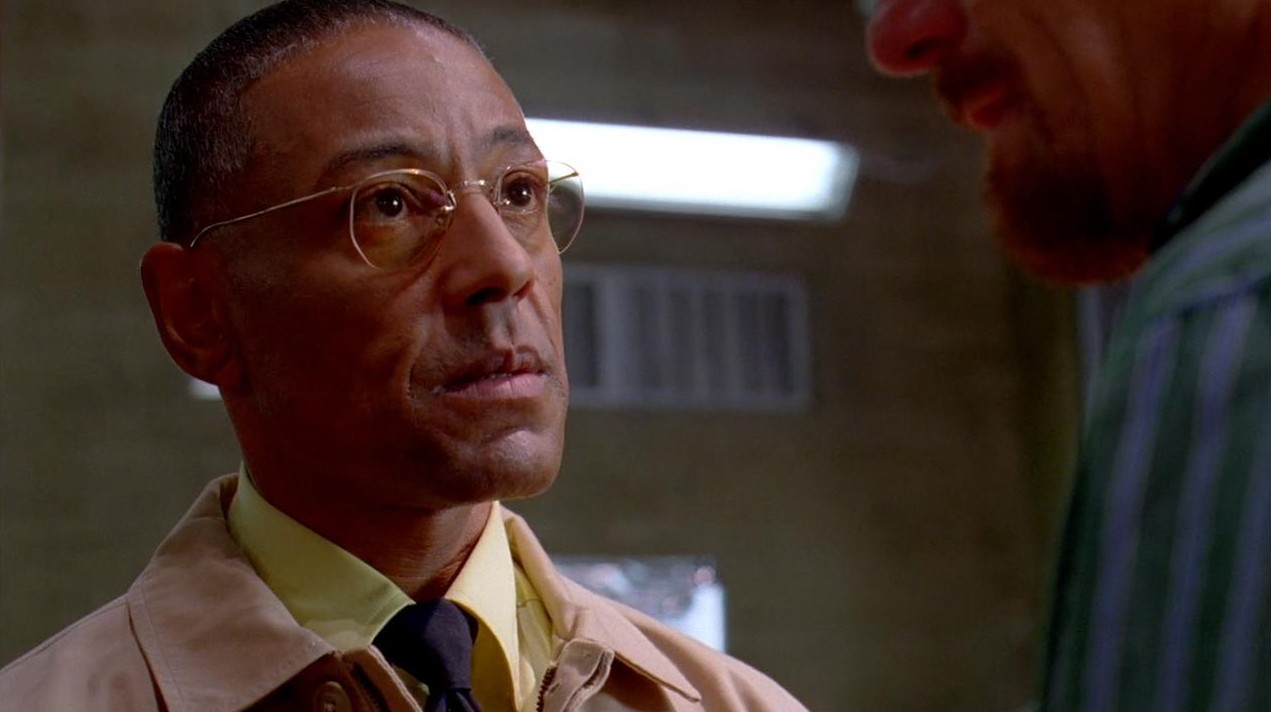
Green Light
Jesse has cooked his own blue meth and wants to sell to Gus, whether or not Walt approves. Meanwhile, Hank re-opens his investigation into “Heisenberg”, unable to focus on anything else.
I didn’t especially enjoy this episode and I think I know why. Walter White is a compelling character, but he only works when he is placed in certain situations. In this installment, Walt spends most of his screentime acting sarcastic and petulant. I suppose this is to show how unsettled he is after Skyler told him about her affair, but it just doesn’t work.1 Walter is at his most interesting when he is self-motivated and calculating – I don’t watch Breaking Bad to see a middle-aged man sulk and have occasional temper tantrums.
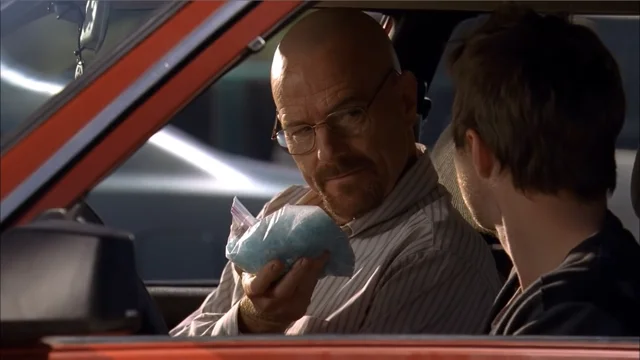
However, there is one scene with Walt that I really like – the conversation with Jesse in the parked car. These characters haven’t interacted much this season and it is a real shame because they have such good chemistry. We are reminded of how their relationship, while affectionate, is still very dysfunctional through some excellent dialogue:
Jesse: It’s the one thing I’m good at.2
Walt: No, that is just not true. You’re good at a lot of things, son.
Jesse: Like what?
Walt: … What about your sobriety?
The fact that Walt cares enough about Jesse to call him “son” but doesn’t know he was in a band or has a talent for art demonstrates how shallow and one-sided their relationship truly is. Walter also gets very defensive when he sees the crystal meth Jesse has made, and I like that the show leaves it ambiguous whether or not Jesse actually made a mistake or if Walt’s ego is so fragile he can’t accept a protégé outperforming him.3
The last thing we need to discuss is Hank’s storyline. Hank is pretty unlikeable in this episode but it feels earned as this plot point was given the proper amount of set up. Hank cannot admit to himself or his superiors that he has PTSD, so pursuing Heisenberg gives him a plausible excuse not to go back to El Paso. Hank becomes hyper-focused on the case, becoming belligerent when anyone questions him. When Gomez tries to offer Hank some reassurance and places his hand on his partner’s shoulder, Hank demands that he stop touching him. This mirrors a similar scene that took place between Walt and Hank back in Over (Series 2, Episode 10)4 and I don’t think that is a coincidence. Both characters have their own issues with toxic masculinity – whether or not they can overcome them is one of the fundamental themes explored in Breaking Bad.

Odds and Ends
- Mike shares a few scenes with Walter and I’m sorry to say that there is no spark or chemistry between the two actors. Breaking Bad has now accumulated several “tough guy” characters – Mike, Victor, the Mexican criminals – and none of them are that well-defined or compelling to watch.
- Walt sexually harasses his boss Carmen, resulting in him being placed on “an indefinite sabbatical”. Personally, I enjoyed Walt struggling to balance his teaching commitments with his life of crime, but it seems that the writers aren’t interested in that anymore. I’m also not entirely comfortable with how this scene is framed – when Walt assaulted Skyler it was treated as horrifying, while here the tone is confused and almost comedic.
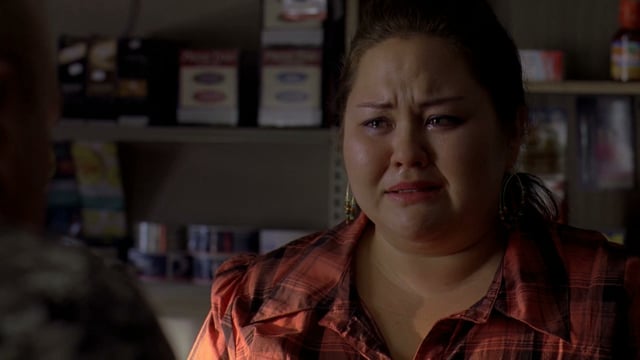
- I really enjoyed the performance of Jolene Purdy as Cara, the gas station cashier. You can see how beguiled she is when Jesse convinces her to accept the blue meth. Similarly, when Hank turns up later and intimidates her, I completely buy her panic and distress.
Spoilers
- Walter eventually confesses to Jesse in One Minute (Series 3, Episode 7) that the crystal meth he made independently was just as good as Walt’s own product.
- We won’t see J. P. Wynne High School again until Granite State (Series 5, Episode 15), the penultimate episode of the show.
Más
Gus finally manages to lure Walter back into the meth business. Meanwhile, Marie is hurt by Hank’s refusal to confide in her.
One of the aims of Season 3 was to make Gus Fring a more prominent character, as both the writers and the fans had fallen in love with Giancarlo Esposito’s performance. This episode is a crucial part of that transition, with Walter deciding to work for Gus in his underground laboratory.5 It is a choice that ultimately dooms Walt and removes any chance of redemption, so it is worth taking some time to examine how he came to this decision.
The most obvious answer would be to blame the speech Gus gives to Walter at the laboratory, one of the most famous moments in the entire show:
“When you have children, you always have family. They will always be your priority, your responsibility. And a man, a man provides. And he does it even when he’s not appreciated or respected or even loved. He simply bears up and he does it … because he’s a man.”
We know that Walt is the kind of man who defaults to the comfort of toxic masculinity, so questioning his resolve or ability to provide for his family is a smart move by Gus. However, I don’t think that Gus is the person most responsible for getting Walt back into the meth business – it’s Jesse.

Consider how angry Walt was when he saw the blue meth Jesse made without his input. Placed alongside the resentment Walter feels towards Gretchen & Elliott, and his jealousy when Walt Jr. looks up to Hank instead of him, we can conclude that one of Walt’s greatest fears is being supplanted by someone else. His ego cannot allow Jesse to succeed without him, so working with Gus and forbidding Jesse from using their formula removes that possibility. If we view their relationship as a “father-son” dynamic, we can compare Walter to Kronos, destroying his own children so they cannot overthrow him.6
***
Since the shoplifting arc came to an end, the show hasn’t focused much on Marie – that’s a shame because the last two episodes have seen some phenomenal acting from Betsy Brandt. Marie is struggling with the aftermath of the El Paso bombing – Hank has thrown himself into work in order to suppress his trauma but refuses to discuss this decision with his wife. This means Marie has no outlet to discuss her own conflicted emotions about the incident – her relief that Hank wasn’t killed; her guilt over pushing him to pursue advancement in the DEA; her self-doubt about whether she is a supportive spouse.

These scenes not only give some much-needed attention to one of the few prominent female characters in Breaking Bad. Marie represents an opportunity to explore the damage the War on Drugs does to the police officers who actually enforce it, as well as the loved ones who surround them. For that exploration to have the appropriate impact, we need to care about Marie as a person. Betsy Brandt is a good actor and I am happy that the writers are giving her some space to show off her skills and bring a new perspective to the events of this story.
Odds and Ends
- There is an extended flashback where Jesse and his friends visit a strip club using Walter’s money.7 It includes information crucial to the plot, but the way the scene is shot feels exploitative – you could use it to teach a class on the male gaze.
- I don’t understand Skyler’s reaction when she re-examines Walt’s bag of cash. She denies when questioned by her attorney that she wants to spend it, but when she holds the money in her hands she treats it like a gift from the heavens. Does she approve of Walt’s behaviour or not?

- Walt agrees to produce two hundred pounds of methamphetamine a week for Gus. To put that number into perspective, Walt and Jesse only managed to make forty-two pounds during their marathon cooking session in 4 Days Out (Series 2, Episode 9).
- Hank makes the effort to be supportive when his partner Gomez receives the promotion he turned down – compare and contrast with how Walter reacted when Jesse threatened to eclipse him.
- I’m probably in the minority when I say this, but I have not enjoyed most of the scenes involving Saul this season. His sole motivation has been to get Walt cooking again, which is understandable but isn’t exciting to watch. His dialogue has also been quite misogynistic – I didn’t need to know that Saul likes Vietnamese sex workers.
You must be logged in to post a comment.