


Galavant was a musical comedy television series that ran for two seasons. From that sentence, it may be correctly inferred that the show was destined to be short-lived and have a cult following.
The list of successful television musical series is a short one. It probably goes something like this:
- Glee
- My Crazy Ex-Girlfriend
- everything else
- Cop Rock
There are many reasons why they remain rare animals: they can be polarizing and may not have enough viewers, the production costs may be prohibitive, and Hugh Jackman will probably never be interested in doing TV. But somehow, Galavant exists.
Mallory Janssen, one of the show’s stars, described Galavant as “the bastard child of Monty Python and The Princess Bride“, which is accurate. The show was developed by the creative team behind Tangled (2010) which should come as no surprise to anyone familiar with either property.
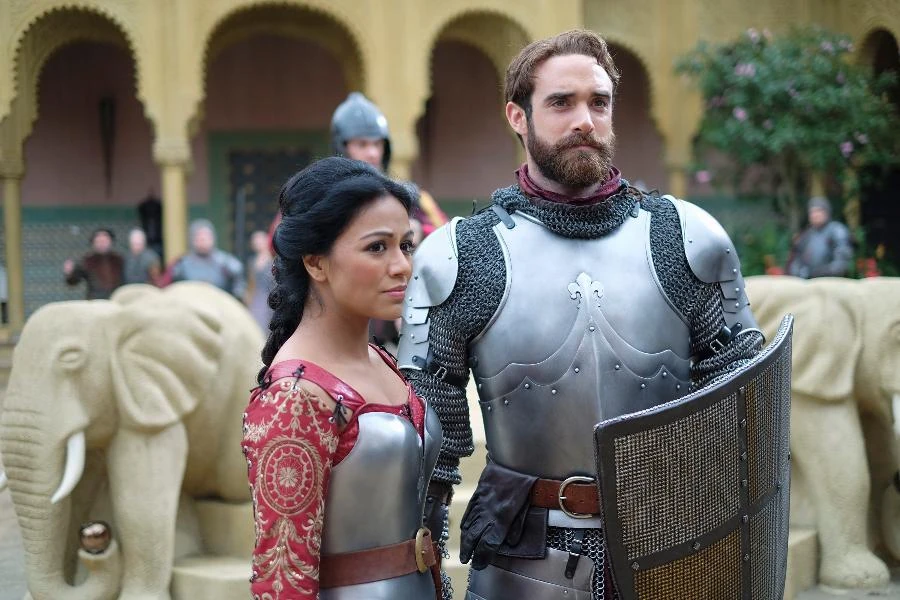
Galavant itself plays very much like a PG-13 Tangled in many respects. There are swords, there is sorcery, eventually, and there is even a dragon. A real dragon. The setting is familiar, though the tone is aware but irreverent. Its main storylines acknowledge conventions but largely for the purpose of mocking them. Most importantly, the plot never misses an opportunity for a song or a quip. (Minor involvement from Weird Al might be a small spoiler, and a treat, but it should come as no surprise.)
This is where Galavant excels, but I concede that enjoyment of both elements may be subjective. The show is funny enough – and the songs catchy enough – that its winking self-awareness never becomes the point of the show. I personally love Galavant but also completely understand why some won’t make it through the opening number.
While I feel I’ve described the show well enough to allow for informed decisions, it would be a great omission to not devote some space to the cast. There are essentially seven regulars here, all of whom were well established if not household names in 2015. Everyone excels in their roles – everyone. If there is a weak link, it would be Vinny Jones, and only because he is the one nonsinger among the cast; admittedly, his character calls for a Vinny Jones type and he shows surprising depth at times. But everyone is enjoyable, and the pairings are a legitimate selling point of the show.
Timothy Osmundson in particular is a delight. His Richard might be the only one who truly understands that he is a character in a musical comedy, and his development in the second season is inspirational. It is no coincidence that the entire show peaks with the realization of his character in the finale.
The show does manage to wrap up relatively cleanly at the end of the second season. Getting a second season alone was unexpected – see the season 2 premiere title – and the number of episodes is both too few and more than expected. It feels fair to speculate that the show might have been created too soon; a few years later and more emphasis on streaming TV, and it seems likely to have found its audience. As it is, Galavant stands alone, two unlikely seasons that we can continue to enjoy.