“Caretaker”
Star Trek: Voyager – Season 1, Episodes 1 & 2

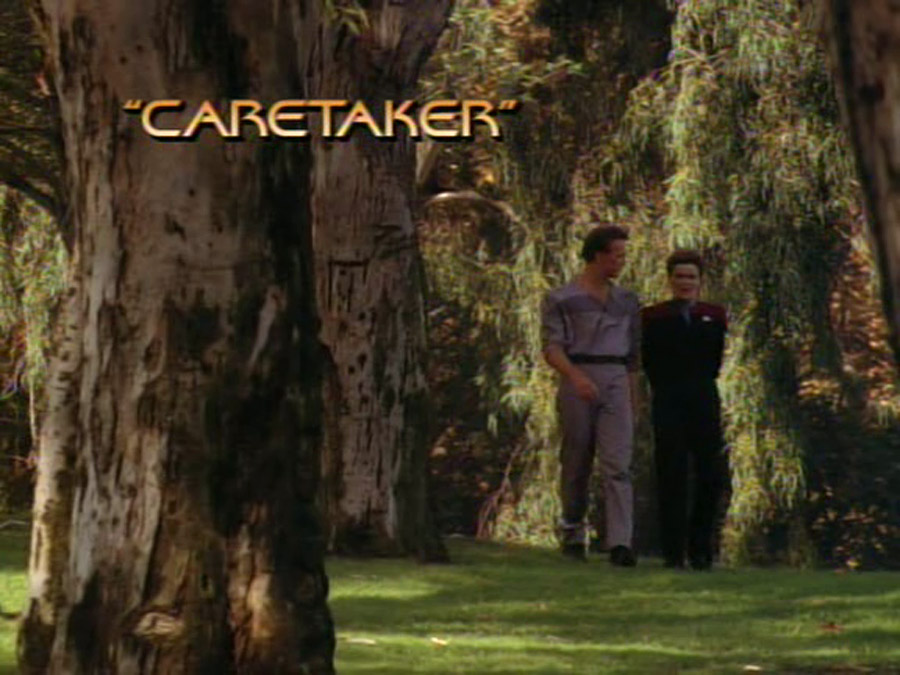
Establishing a new series, even within the framework of a franchise as large and detailed as Star Trek, is still a challenging proposition. There’s a lot of continuity and backstory to lean on, but there’s still the matter of setting up a new premise, introducing a cast of characters, establishing the setting, and most importantly… making us care enough to tune in the following week. With all this in mind, the premiere episode of Star Trek: Voyager is an accomplished and well-executed pilot, and for my money it was the most confident, effective, and exciting first episode of a new Trek series to air.
“Caretaker,” – like Star Trek: Voyager itself – is not perfect, but it is a very watchable and epic adventure that introduces a series full of promise and potential. The episode deals with a mountain of material admirably – some of it previously established, and the rest all new. As a science fiction story it’s decent and hits some familiar satisfying beats. As an entry in Trek it also fits the bill and seems to slide into the larger property comfortably. In the context of the Star Trek franchise, it’s the most inter-connected pilot episode and draws heavily upon plot points introduced by the then-recently ended Next Generation and then-running Deep Space Nine series. There’s a lot to take in and it handles the backstory about as elegantly as one could hope while building an all-new adventure on top of it.
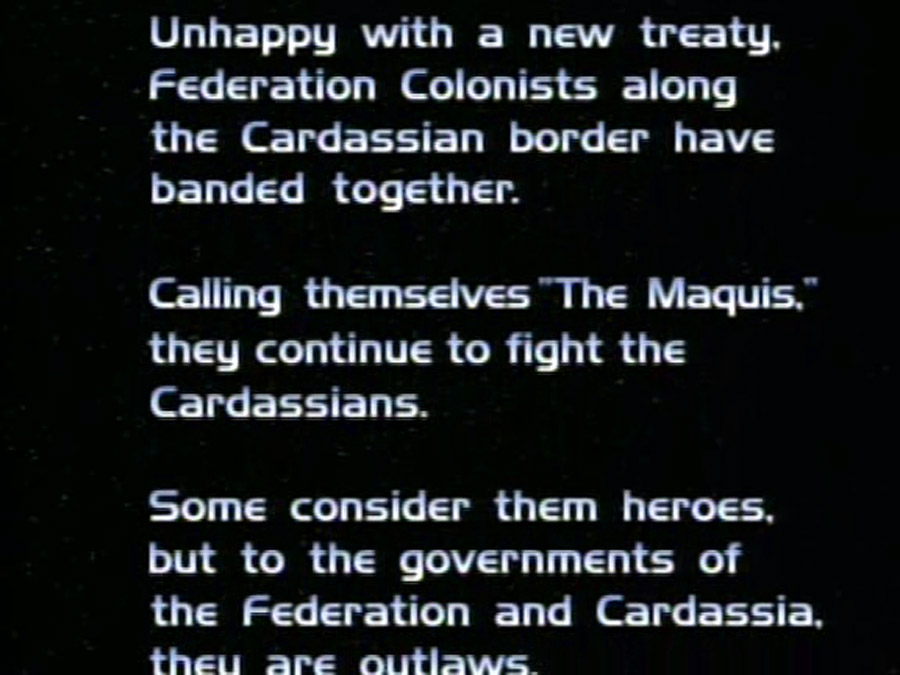
Case in point, it opens with a text crawl (as Deep Space Nine’s pilot did) giving some necessary info-dumping about who the Maquis are. Although their backstory had been created in TNG and further fleshed-out in DS9, the Maquis never quite jumped off the screen in an exciting way. Everybody loves a good renegade, but the political backstory of their origin was somewhat convoluted and dry, and their cause wasn’t that relatable or illustrated well. A few years after this aired the much-anticipated first Star Wars prequel would similarly cause a lot of audience head-scratching over its unnecessarily complicated and boring interstellar politics set-up (“alien C-SPAN” as many have amusingly – and accurately – described).
Fortunately, “Caretaker” doesn’t bog itself down in the particulars of the Maquis’ struggle for freedom/independence/Cardassian blood/whatever that much. Or at all, really. They’re outlaws, and that’s about all you need to know. It’s a fresh angle for Star Trek and gives the story a very welcome edge (much as the non-Starfleet cast of DS9’s characters did for that series). The stinger of the episode makes the daring choice of featuring only Chakotay and his crew (namely Torres and an undercover Tuvok) on the run from the Cardassians. But they soon have bigger fish to fry when a strange anomaly barrels towards them and sweeps them to the other side of the galaxy in the distant Delta Quadrant.
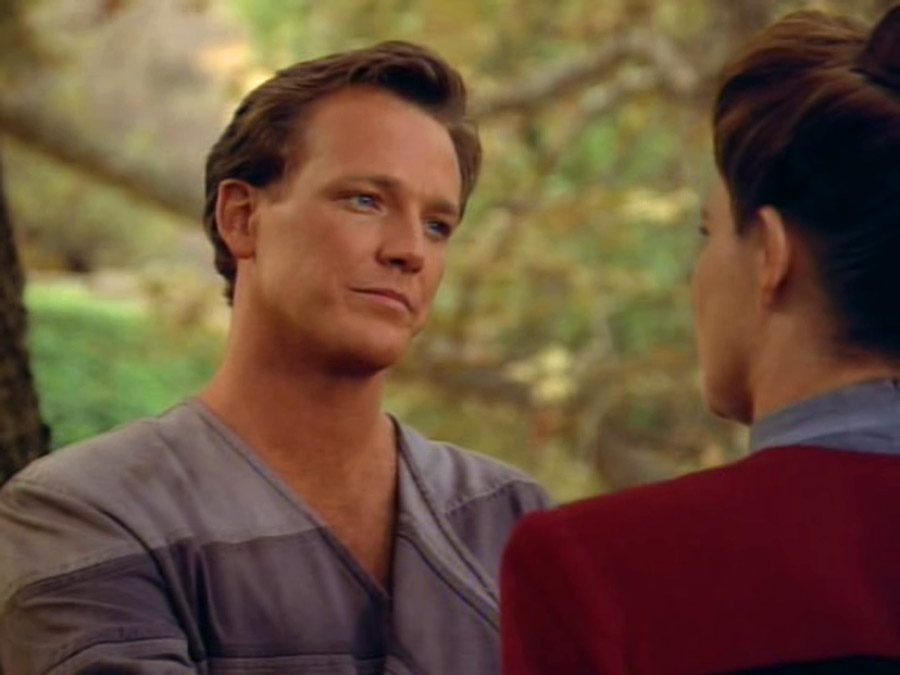
But these aren’t the only outlaws here! Enter Tom Paris – former Maquis (for a few weeks anyway), current Federation prisoner, hot shot pilot, Starfleet drop out, and handsome bad boy extraordinaire! Recruited out of a New Zealand prison colony by Captain Janeway of the newly-minted USS Voyager, Tom is a really crucial thematic component of the pilot. As a disgraced former officer and failed renegade, he’s a less than subtle signal that this isn’t your dad’s Star Trek, and his inclusion provides some good interpersonal dynamics all around. He’s mistrusted by the Starfleet crew, and as a captured rebel who’s agreed to help track down his former fellow renegades he’s hated by the Maquis, too. Along with some other casting choices, he helps give some flavor to the show.
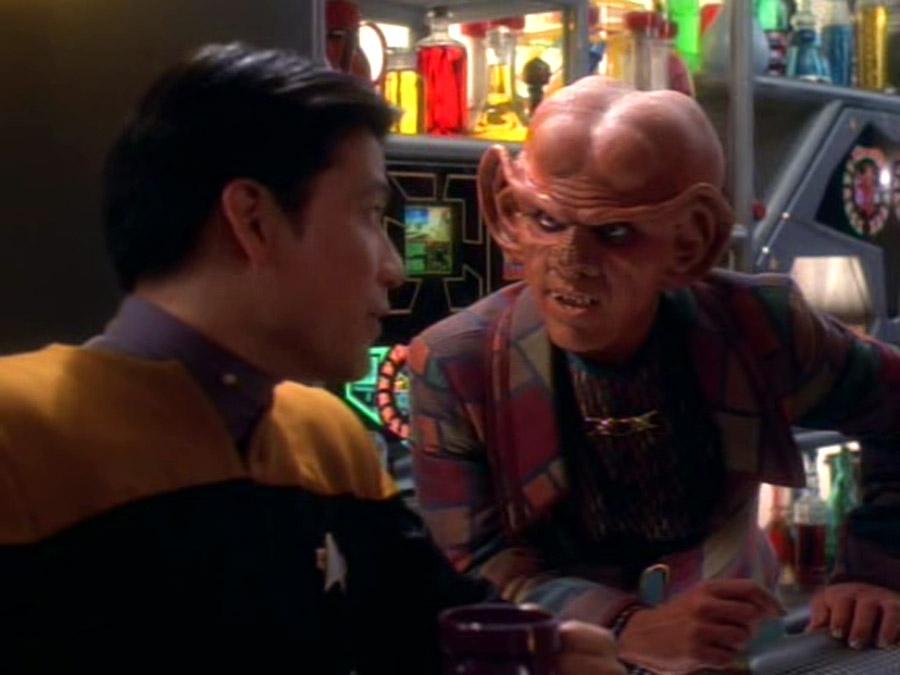
Deep Space Nine leveraged the gravitas of Patrick Stewart’s Captain Picard to help its pilot (even going so far as to intertwine his Borg days with Sisko’s backstory and make them practically enemies). Voyager uses the station of DS9 as a literal jumping off point to its adventure. It even has Quark to introduce us to fresh-faced Ensign Harry Kim in an amusing scene. It’s nutty, but it works in further placing Voyager among the mythos of Trek. He quickly forms a friendship with Tom that would be one of the central relationships of the series. The first Asian cast member since George Takei, Kim’s presence is some welcome diversity, and his role as the green junior officer would provide a lot of story mileage. Pairing him with the somewhat more grizzled and jaded Paris is a good choice for the episode and rounds out both characters. Bashir and O’Brien’s bromance gets a lot of credit from fans (and it is indeed great), but it took Deep Space Nine several seasons to get them together. Whereas on Voyager, Tom and Harry are there from the beginning, which is nice and impressive in its own way. Reporting for duty, Paris runs afoul of the ship’s doctor and first officer, two starched uniforms who drip with contempt over having him aboard. Stay away, Harry! He’s nothing but trouble!
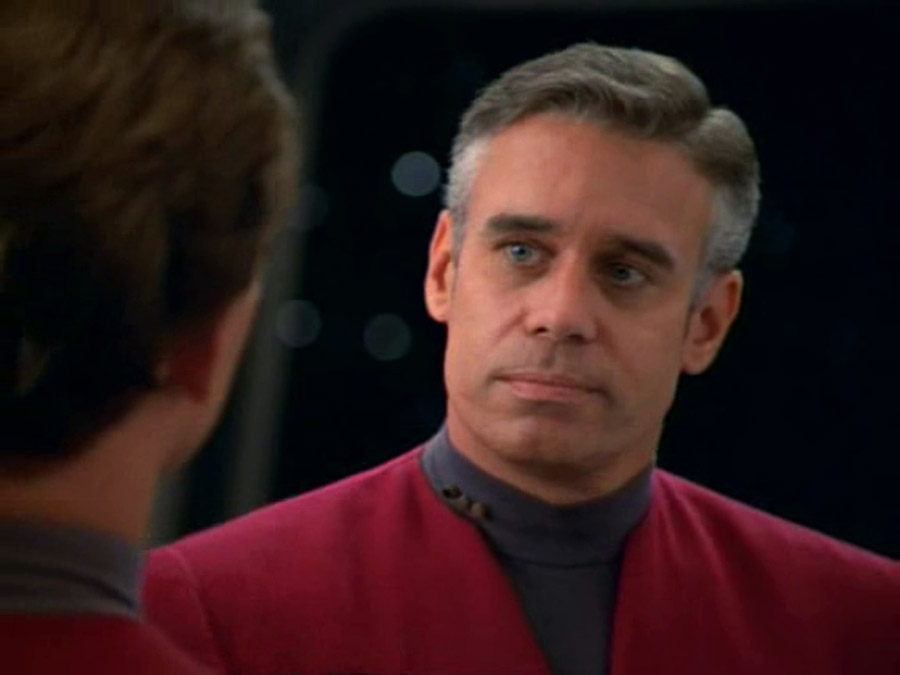
Janeway has a much friendlier and spunky energy. As the first woman to helm a Trek series, there’s a lot riding on Mulgrew’s shoulders but she handles the role capably. It’s interesting how decentralized the cast is – Janeway is of course in charge, but she doesn’t feel like the protagonist of the episode the way Picard or Sisko were in their respective pilots. If anything, Paris feels like the character who has the strongest story arc in the pilot, and he is indeed the most interesting person here. Kim gets the next most screen time, being paired up with not only Paris but Torres in the Ocampa hospital. It’s also a good dynamic, and I like their thorny banter.
Perhaps part of this is due to the recasting of Janeway from the original choice Geneviève Bujold. Having seen some of the original footage with Bujold, it seems like they made the right decision to go with Mulgrew, who has a far better screen presence and commanding persona. She exudes a tough alpha female energy but an emotional tenderness, as well. Her best scene is one with Tuvok that lays the foundation for their friendship. She stares out the window wistfully as she muses about never getting to know her crewmembers that well, her voice falling to just above a whisper. It’s a burden of command and an irony Trek has reinforced before – the captain cares deeply about their crew, but there’s always that emotional distance that’s necessary and must be maintained. Mulgrew really emotes the burden she feels to get the crew home – Harry to his mother, and Tuvok to his family.
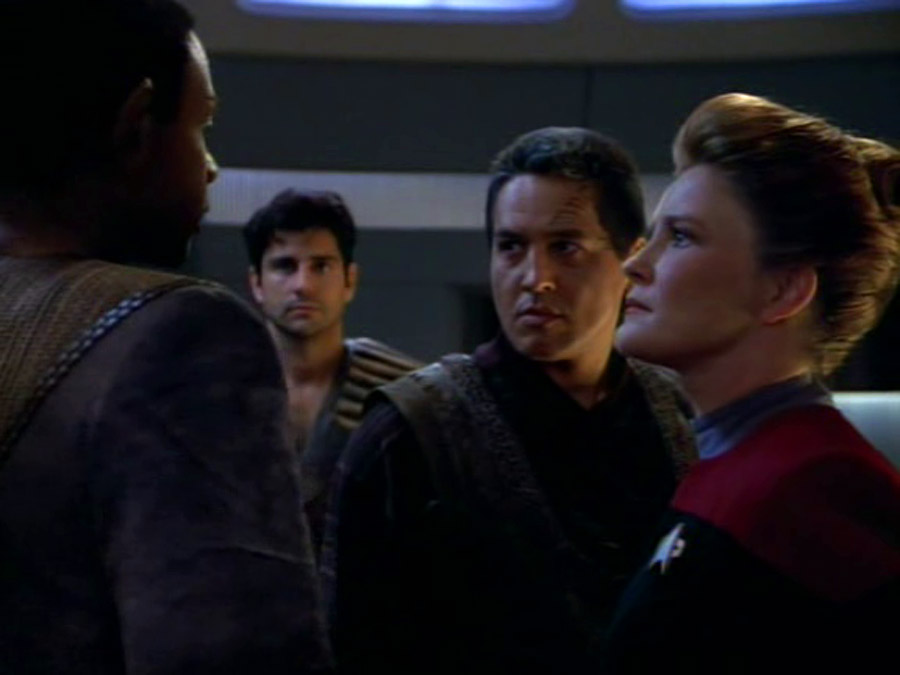
Chakotay is kind of… just there. He gets a couple of good scenes but it would have been nice to get some more emphasis on him. In the context of the show, he’s just as important as Janeway, being the captain of his own crew. The first couple seasons would depict him as the moral leader of the Maquis in some important ways. Similar to Paris, he’s not a squeaky-clean Starfleet type, but someone with an edge and some saltiness and it provides some nice flavor.
Neelix is of course The Alien and his presentation here is pretty consistent with who he is throughout the series. Though he would be given depth in some notable episodes, he’s generally a grating person. The conception of the character is a little confused – he’s a nomadic alien junker dressed in furry rags, suspicious and experienced in the rough and tumble way of life in the region. He tricks the Voyager crew into helping him rescue a captured Kes from the Kazon, which is pretty brazen but admirable. But he’s also a super nice guy – obsequious even – who wears ridiculously flamboyant pastel suits and dreams of being a ship’s cook? It’s a little scattered, like he’s a mash-up of 2-3 character types. I always felt like the show was going for a Quark type with him, but without any of the edge or interest. In terms of any alien intrigue Neelix offers as a character, it pretty much peaks here and drops off drastically as he quickly endears himself as Janeway’s lapdog, which is unfortunate.
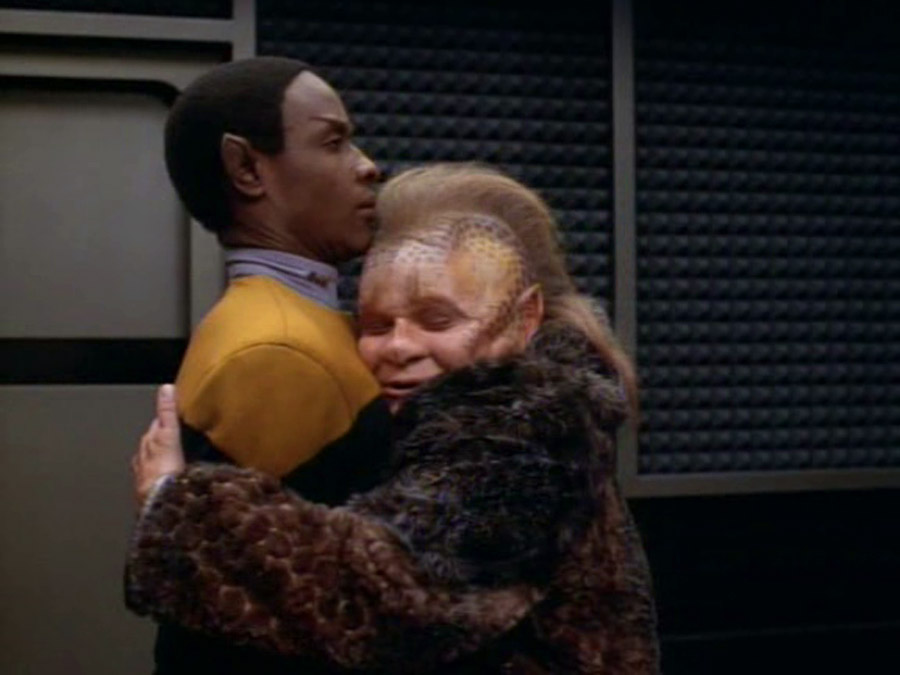
Similarly, I think Kes’ character also peaks here. First seen as a battered prisoner of the Kazon who managed to escape her underground society (and refused to snitch about how she got out), she comes off as a somewhat impetuous youth who threw off the shackles of her rigid and unimaginative society. When she returns to said society with the Voyager crew she blasts them for doing whatever (they believe) the Caretaker wants. After centuries underground being cared for by a higher being, the Ocampa have become a stagnant and inert people like the Eloi. They apparently had powerful mental abilities that have atrophied over the centuries from non-use. Kes’ spirit is too boundless for this kind of life, and so she escaped from it. But removing her from this context (as she is by the episode’s end) also removes all that drama, and like Neelix she’s just kind of there for the rest of the show (outside of a couple notable stories).
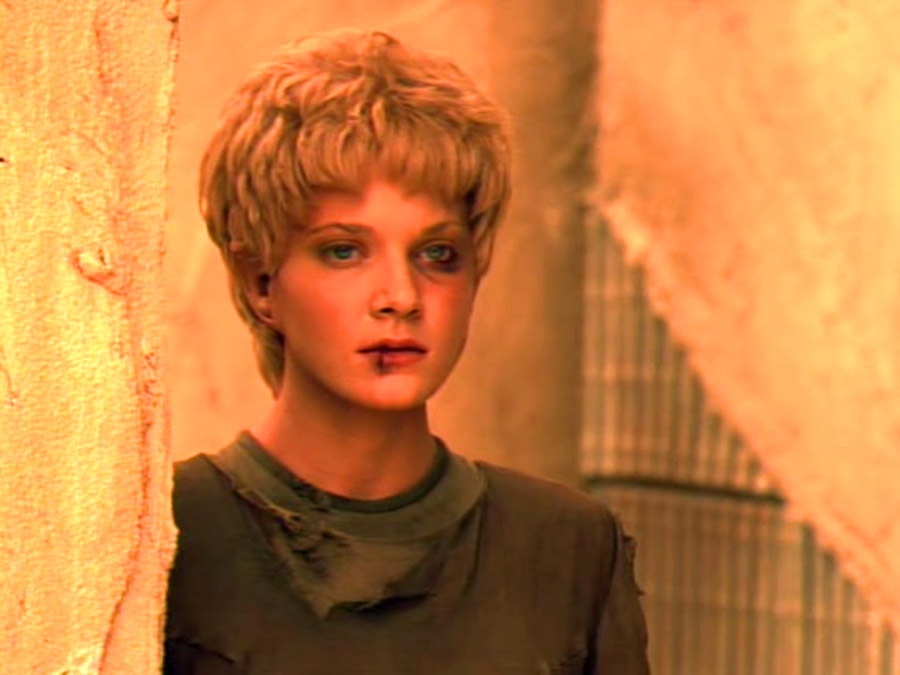
Lien embodies an intriguing serenity and a distinctively level, soothing voice, but I think they’re at odds with who the character is supposed to be. Her energy suggests an old soul at peace with the universe, but she’s also a youngster that’s only 2 years (?!) old. I think she would have made a good Trill, since she exudes a calm confidence that comes with several lifetimes of experience (she plays Dax better than Terry Farrell originally did). But instead she’s the exact opposite – someone extremely (extremely) new to the world/universe and full of youthful energy and verve. This episode is the only one that really conveys that rebelliousness in Kes. Although she’s basically a teenager, the show never explores what that would mean for her as a character (perhaps thankfully, considering how teens can be). Like Neelix, there are a couple conflicting ideas going on here which make the character a little muddled.
(In fact, she’s physically an adult and already sexually mature – in the next season she’ll even have a crisis over whether or not to have children when the opportunity arises. In this context especially it makes her relationship with Neelix SUPER weird and gross, and a component of the series that never, ever worked for me.)
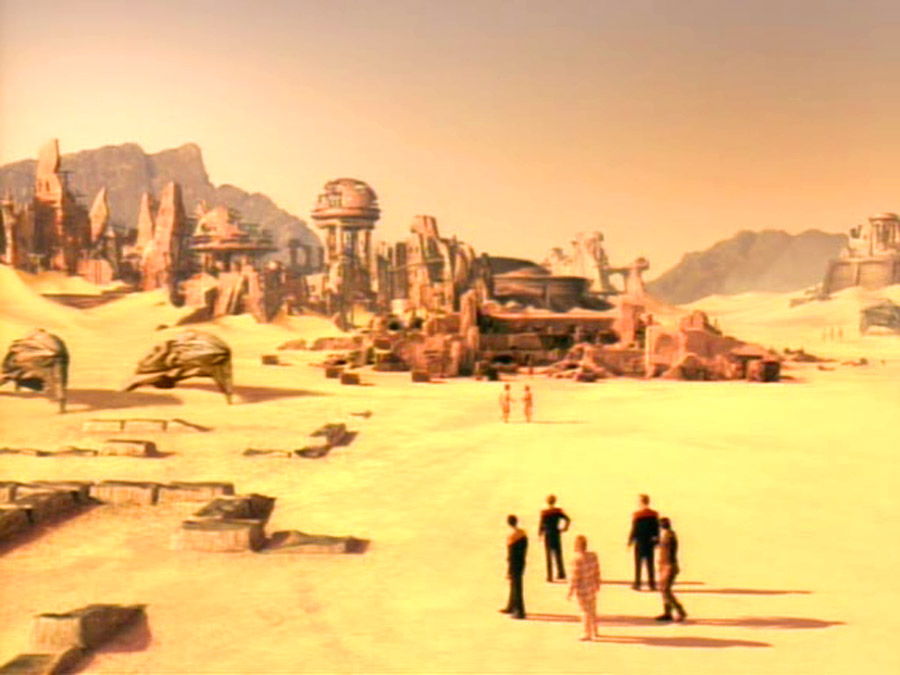
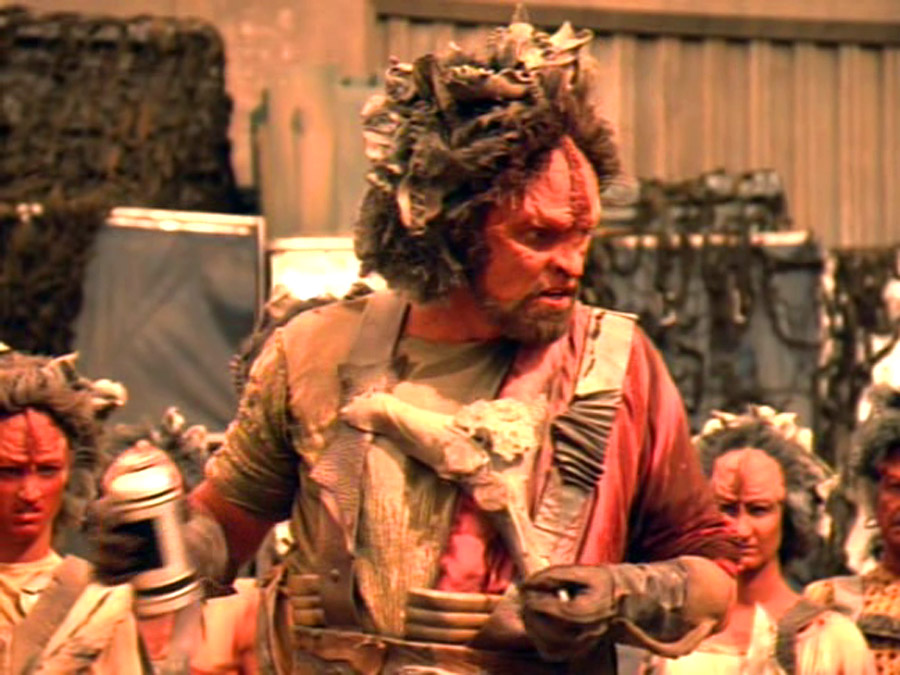
One of the most persistent pieces of show lore introduced here is… the Kazon. Intended as the initial main antagonists, they were billed as the Klingons of the Delta Quadrant. It’s fair to say that no one liked them, despite the series’ continuing insistence on trying to make them happen. They’re fine here I guess as a dramatic obstacle, and in small doses overall they work well enough. But there’s nothing compelling about them and Voyager would come up with far better antagonists (or use previously established ones). Their conception as technologically inferior scavenger-warriors isn’t spellbinding, and they would go on to just be pests throughout the first two seasons, both to the crew and us the viewers.
The climax of the episode is exciting, with everything coming to a head in a thrilling way. The sight of the behemoth, absolute unit Kazon ship pummeling Voyager is a memorable one, and goes to shows how dangerous and unknown the Delta quadrant is. The fact that Voyager has superior technology that the region lacks (specifically transporters and replicators) is an interesting detail and would generate many plotlines (before eventually being done away with as the show progressed). But they’re all alone and in an unknown that’s much more unknown than any unknown… ever known.
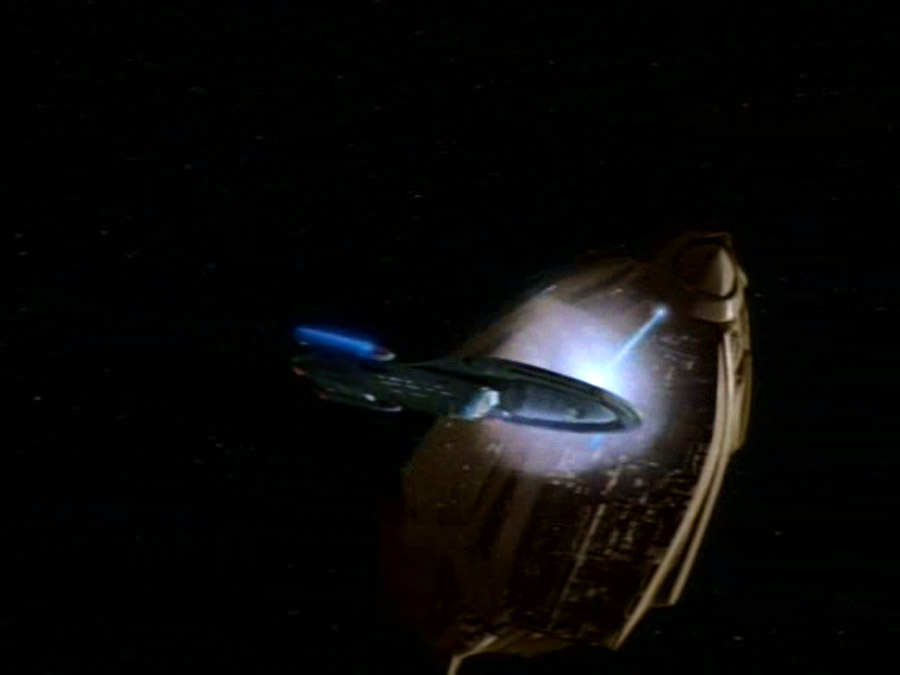
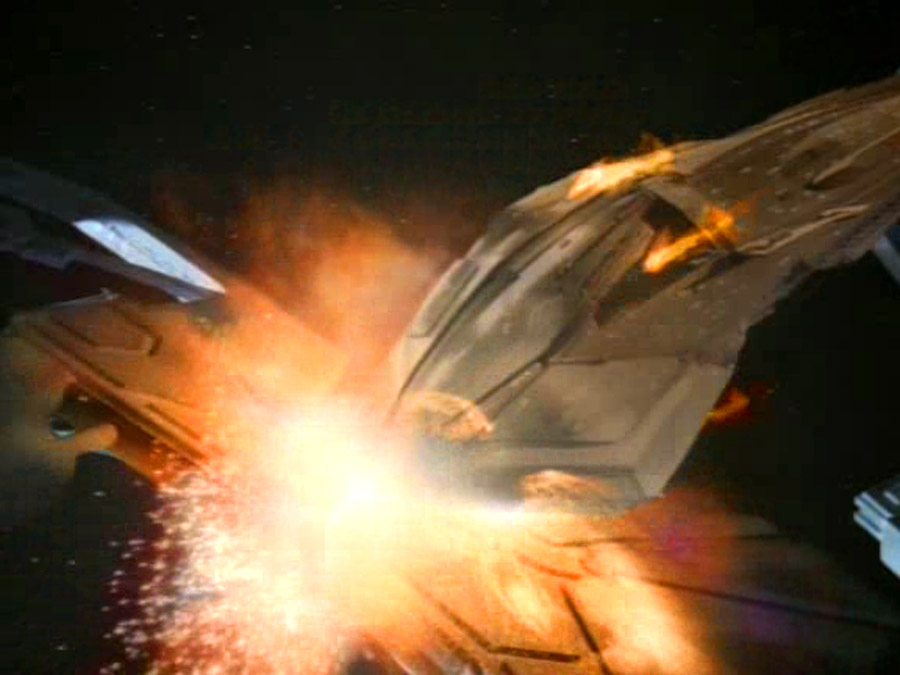
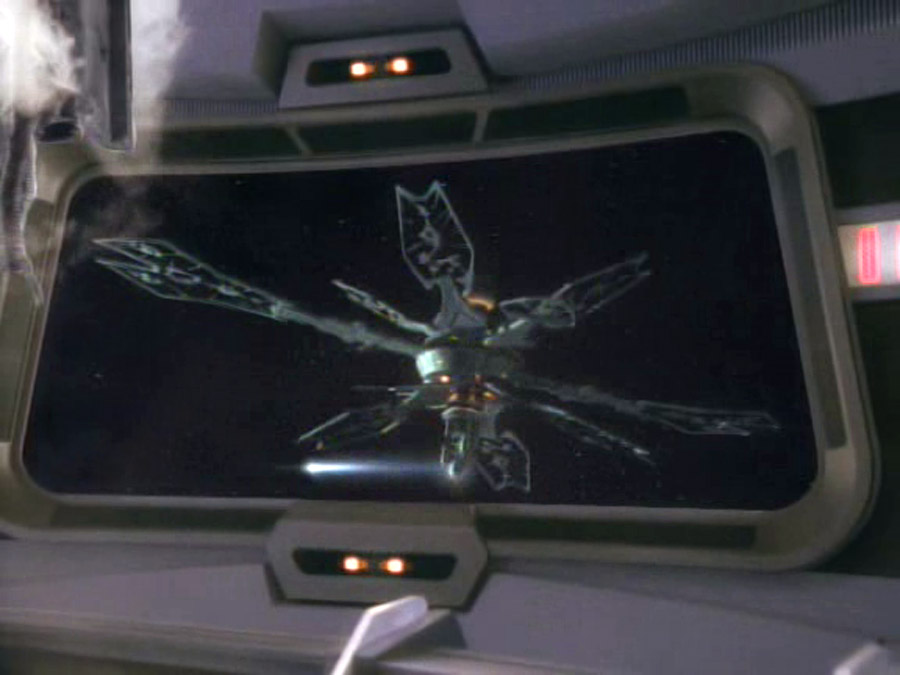
The sci-fi premise that’s at the heart of the story is good and there seems something classically Asimov-ian (or Clarke-ian) about it. The execution leaves something to be desired for several reasons. There’s a certain clunkiness to it, if only because there are so many details and players that need to be set up and it takes a while for it to come together. The sight of the gigantic Caretaker array firing energy pulses off into the unknown is a great, mysterious image. It’s no black monolith, but what else could be?
We eventually meet the Ocampa, the race that the Caretaker… takes care of. As said, they’re a very mild-mannered people who regard the Caretaker with a hushed, almost religious awe. Since he never speaks to them directly, they must interpret his wishes and supposed plans for them. The episode doesn’t delve much further into this idea, but it’s a classic sci-fi concept and one that’s been featured on Star Trek multiple times. In fact, every Trek pilot has included a God-Like Being in its plot, so I suppose it’s tradition. But there are no gods in the Trek universe, just super advanced aliens that aren’t that different from us when you peel back the amazing abilities. Starfleet’s advanced technology makes Voyager a little god-like to other aliens here, as well.
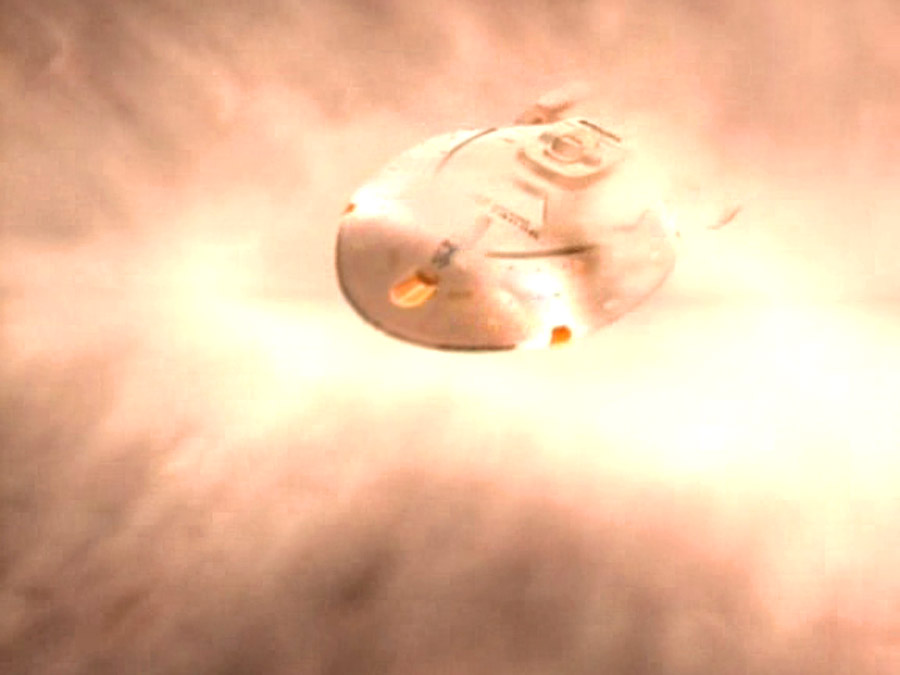
It’s interesting, but as is the case with much science fiction, there’s not a whole lot of heart to the premise. Deep Space Nine’s pilot at least created a strong emotional story that linked Sisko’s pain with the strange, alien Prophets/wormhole aliens. In contrast, the Caretaker plot is just a bunch of stuff that happens and it’s difficult to really care about any of it on an emotional level.
What we eventually find out is that the Caretaker is one of a pair of super advanced aliens that were studying the Ocampa a thousand years ago. But their technology was incompatible with the planet’s something something and they accidentally destroyed their ecosystem. Rather than just dusting off their hands and saying “tough shit,” they stayed behind and set up an advanced underground society for them, providing them with all the energy they need (the pulses fired by the array). One of the aliens got bored and left, leaving the Caretaker to shoulder the burden of propping up this entire race of people he accidentally doomed to possible extinction. But now he’s old and dying and has been providing the Ocampa with a surplus of power that should last them several years. At the same time, he’s been searching the galaxy for a compatible life form to take over for him and run the array, hence the snatching of vessels from all over.
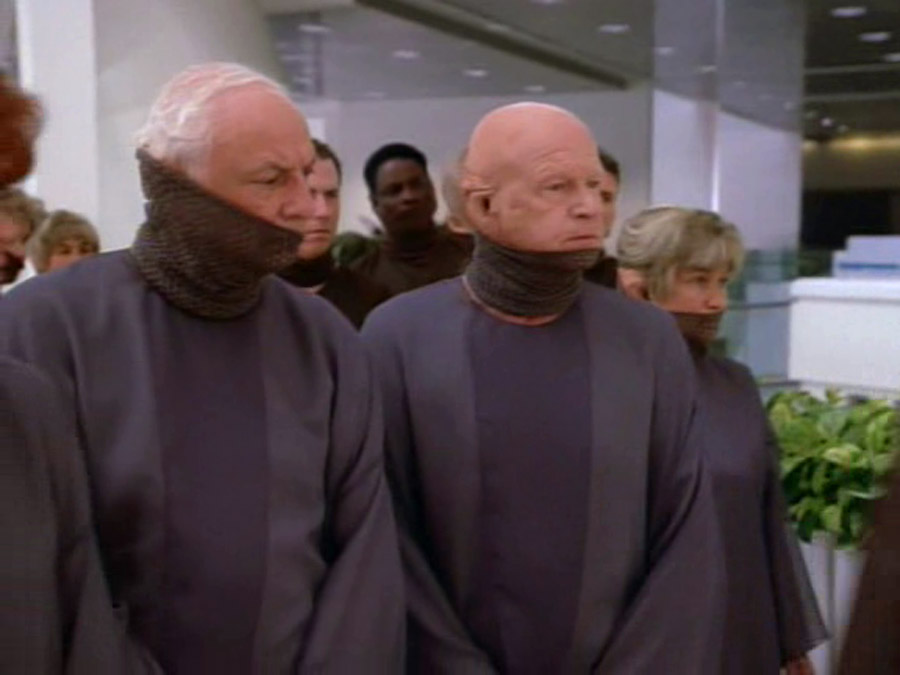
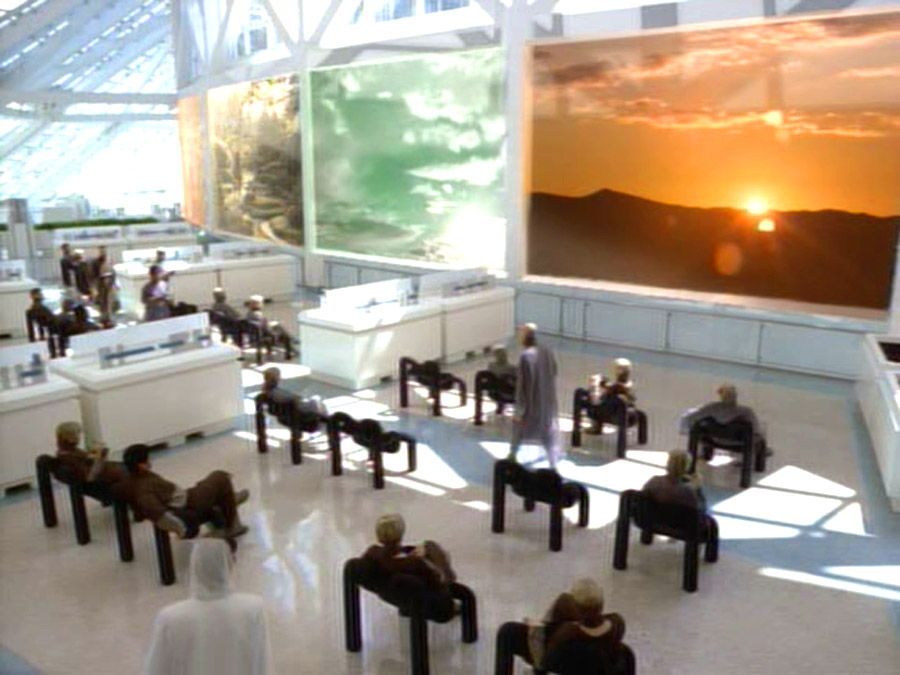
The broad strokes of the story are good stuff, appropriately epic and dramatic. But the actor portraying the Caretaker is far too hammy to take seriously. The entire emotional core of the story rests upon him and it unfortunately falls through. I wouldn’t have expected a Martin Landau or a Charlton Heston-level ack-tor, but they could’ve done a lot better than this central casting old coot. The Caretaker does that classic alien move of providing an Earth-like environment to interact with the crew in, and it takes the form of an old country farm (and him as a withered banjo-plucking farmer). It’s kind of ridiculous and the story never quite escapes from the inherent silliness of it.
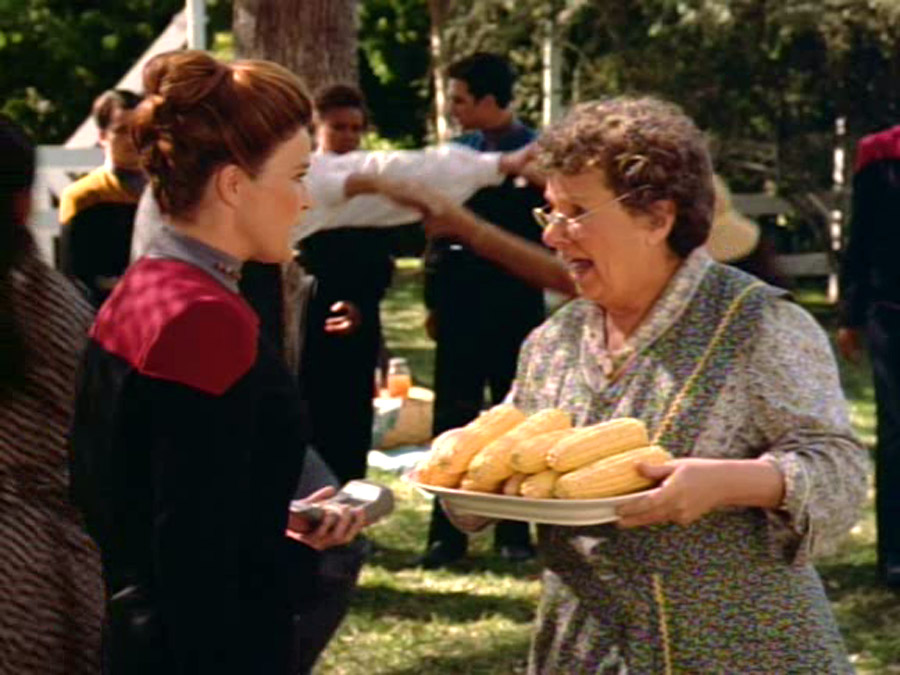

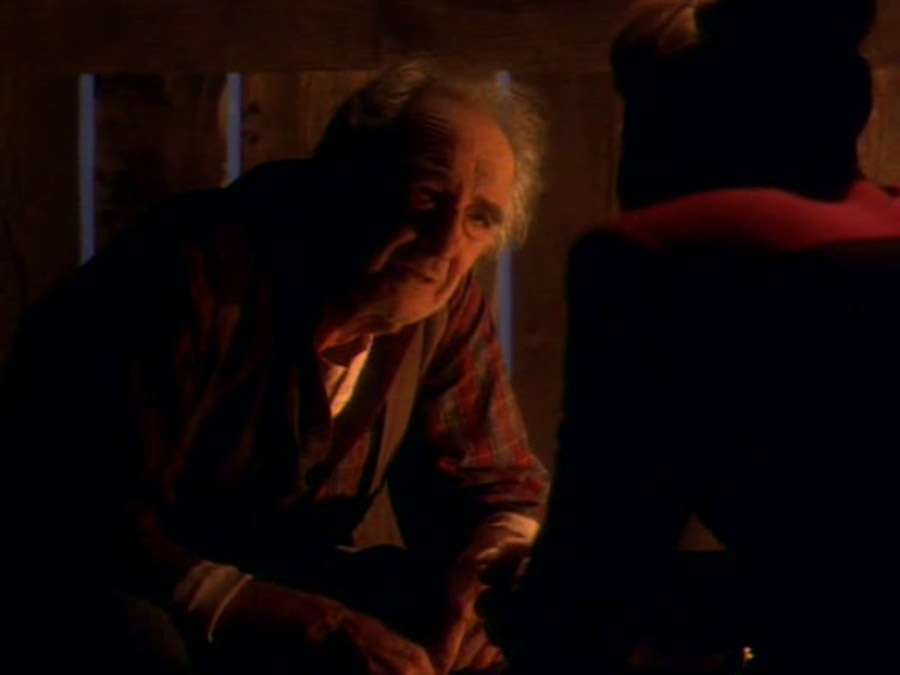
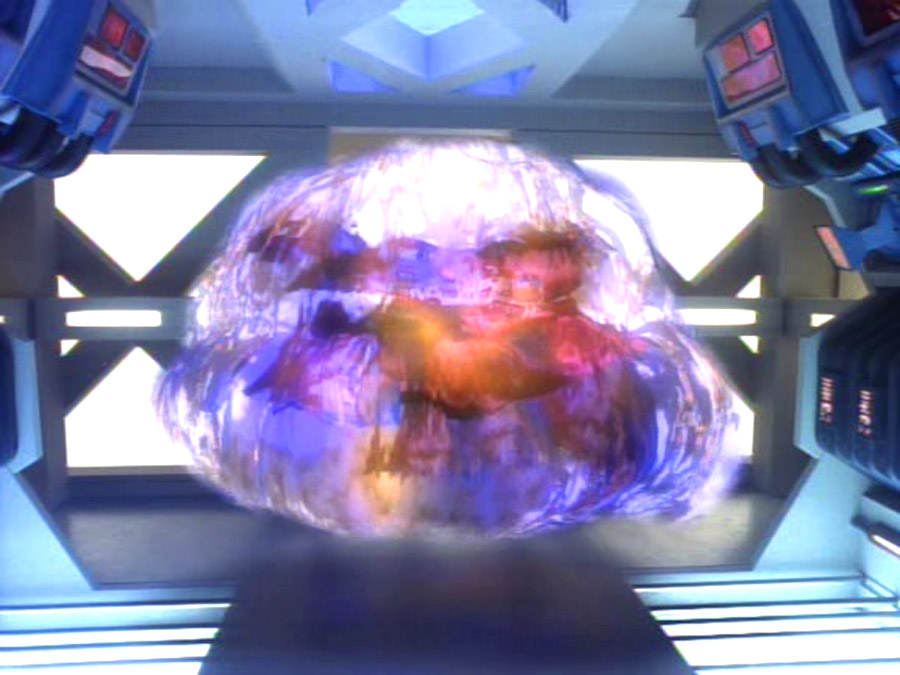
Thematically, him being a farmer who tends to his land (and flock) makes sense in the context of the Ocampa. But the execution just doesn’t quite measure up. At the climax of the story (and the end of his life) he sits alone in his barn, lit only by a dim lamp. Finally understanding everything, Janeway suggests that though the Ocampa are like his children, there comes a point where a parent has to let them grow up, struggle, and hopefully succeed on their own. It’s the only scene of this plot that really works on an emotional level, and we can feel the sadness and weight that this alien being carries. Although the Caretaker is a strange and exotic being (his natural form is a gigantic purple blob), he has the same emotional burdens as everyone else and has a strong moral compass. It fits in with the general themes of Star Trek, and I wish that this facet could have been expanded upon to make us care more about… the Caretaker.
This all leads to the central premise of the show – Voyager getting stranded in the Delta Quadrant. Before he dies, the Caretaker sets the auto-destruct on his array so that the Kazon don’t get their hands on his crazy advanced tech. But yadda yadda, the self destruct fails, and he dies. Tuvok figures out how to access the thingie that will send them home, but Janeway is concerned about the Ocampa and what will happen to them (and presumably lots of other local people) if those Kazon dickheads get control of the array, so she decides to destroy it to protect everyone. Even though she was just convincing the Caretaker that these kids need to grow up and start taking care of themselves. Tuvok even brings up that interfering in the situation is a potential violation of the Prime Directive. Simply leaving and letting nature take its course would be a justifiable choice as per Starfleet guidelines. Maybe not an ethical one, though. And as Janeway holds the tiny, shriveled remains of the Caretaker (um), we can see that transference of responsibility pass to her in Mulgrew’s face. It seems the Caretaker succeeded in his mission in an unintended way. She destroys the array and their big chance of returning home.
It’s decent, but a little contrived. Why not just put the tricobalt devices they use to destroy the station aboard with a time-delayed detonator and use the array to get home? Or just hang out on the array for a bit, figure out how to repair the auto destruct, and then get home? As Tuvok indicates, despite how super advanced the technology is, it’s still easy enough for mere mortals to figure out. Maybe they could reverse engineer this tech and apply it to their own ship and bring it back home? From a dramatic standpoint, I realize the point is for Janeway to prove her heroism by choosing to strand themselves to protect another race. It’s an immensely honorable, self-sacrificing act. And the presence of the Kazon and their calling for reinforcements does create a time crunch. But I’m sure the array is bristling with weaponry that could easily drive the Kazon off if need be. The details as presented here are a little inorganic and it feels like Voyager gets stranded because it needs to get stranded.

Janeway unilaterally makes this choice for both the Starfleet and Maquis crews, and Torres is the only one that pipes up about it. Though Janeway’s guilt was referenced here and there, the show never properly dealt with the fallout from Janeway’s decision here (or any of the other morally questionable ones she would go on to make). Which is understandable, because it’s some super heavy and dark stuff when you get down to it. But it could have been sidestepped by just having the Caretaker’s tech get too damaged during the battle to fix or use anymore. Or just having it be too far beyond the comprehension of the crew to ever get to work. But parsing all the details we get here, her decision to strand everyone seems reckless and even unnecessary.
Additionally, one of the most common complaints about this episode (and Voyager’s first season or two), is how quickly and inexplicably the Maquis adopt the Starfleet way – and even the uniforms, as they’re all dressed in by the final scene here. And it is indeed a huge misstep, in my opinion. Though the conflict between the two groups of people would be played out here and there in the initial seasons, the sight of everyone wearing the same uniforms here seems like a drastic truncation of the basic conflict between the peoples. These are two groups of people that do not like each other or even respect one another, as the rest of episode goes out of its way to show through the interactions of Tom Paris and some of the Starfleet crew.
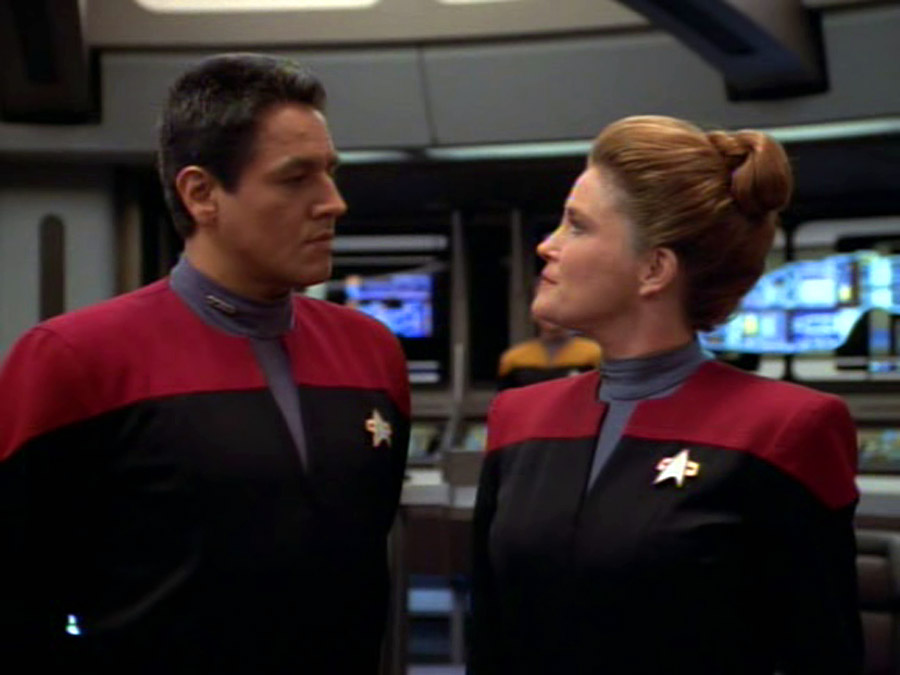
So to have all the Maquis dressed up in the uniforms of the organization they fled from, betrayed (and felt betrayed by), and maybe even hate is just bizarre. Even if the eventual goal had to have been getting everyone on the same team, that could have been accomplished in a much more gradual and realistic fashion. What if it had taken an entire season or two for the Maquis to assimilate and for the two groups to reach a mutual understanding? What if the show had taken the time to really build and nourish that process of coming together? The Maquis were created two shows ago to specifically set up this series, and the amount of planning and groundwork laid was impressive (even if the results weren’t). So given that, it seems even weirder to just wipe most of it away by the final scene in the first episode. It displays one of the flaws of Voyager – an unwillingness to plumb the depths of its premise and exploit the dramatic potentials the series offered. As new and fresh as the show wanted to be, it still seemed risk-averse and too tied to the episodic formula of TOS and TNG.
But anyway.
It goes without saying that any premiere episode is going to be flawed, and Voyager’s was no exception. But in the context of other Star Trek pilots, it’s a remarkably well put together and cogent episode. Being the third Trek series to have been made in quick succession, it shows how well the machinery of the franchise was working and how polished a product it could churn out. It has a fresh edginess that’s enticing and utilizes its budget and SFX to maximum effect for an epic sci-fi adventure. The approach to the characters is impressively solidified and shows a lot of dramatic potential. It’s the most cinematic a Trek pilot had been and though the ride was a little bumpy, it started things off on a bold and exciting foot.
Stray Observations:
- That intro! Absolutely breathtaking and fantastic – visually and musically. It’s my favorite Star Trek show theme and still looks amazing 20+ years later. It seems like a crime to skip it. The cosmic vistas are beautiful and awe-inspiring. Jerry Goldsmith’s score is exceptional, bombastic, and majestic while referencing the echoing wonder of Alexander Courage’s Motion Picture theme. Surprisingly, the intro was never updated throughout the show’s run (as some of the other Trek series’ were). Which is fine, since it’s perfect as is.

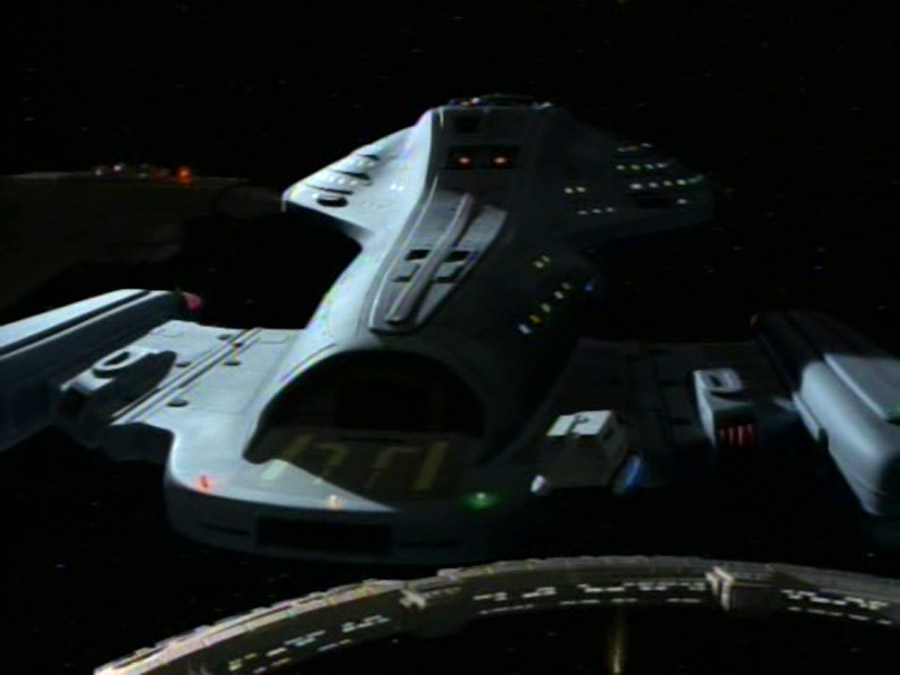
- Voyager’s a nice looking ship. The Galaxy-class was always my favorite, and I like that the Intrepid-class carries a lot of those same graceful curves. The aesthetics of the ship don’t seem like they should work – the ship lacks a “neck” and its warp nacelles are almost disproportionately puny, but it all comes together nicely. It has a lot of dynamic lines and looks good from pretty much any angle.
The corridors are comparatively grey, drab, and unimaginative, though. I think the bright airiness of the Galaxy-class would have been appropriate. One of the aesthetic philosophies of early TNG that I appreciated was that futuristic technology could be more organic and not so functional/utilitarian-looking. The bridge, sickbay, and engineering sets are pretty cool, though.
- Of course, Robert Duncan McNeil played the part of Nicholas Locarno (cool name, brah) in TNG’s “The First Duty.” Tom Paris is pretty much the exact same character, but not. He even has some sort of piloting accident that got people killed in his checkered past with an attempted cover-up. Curiously, the details of this are only obliquely referenced here and never, ever definitively filled in. It’s pretty odd. I guess for further reading you can just watch “Duty,” but it’s not actually the same character, so that’s cheating. This was only so that rights wouldn’t have to be paid to the writer of “Duty” for every Voyager episode. Hollywoo’s silly like that. (Similarly, Ro Laren was to have been a main character on Deep Space Nine before being changed to Kira for the same reasons.)
I thought it would have been wacky for Voyager to encounter Wesley Crusher using his powers to travel around the galaxy and run into his old classmate Nick. I mean Tom. Small galaxy, huh?
- Gul Evek! The brusque Cardassian officer appeared both on TNG and multiple episodes of DS9, and we see him one more time pursuing Chakotay through the Badlands before his ship takes a beating. Hope he’s OK.
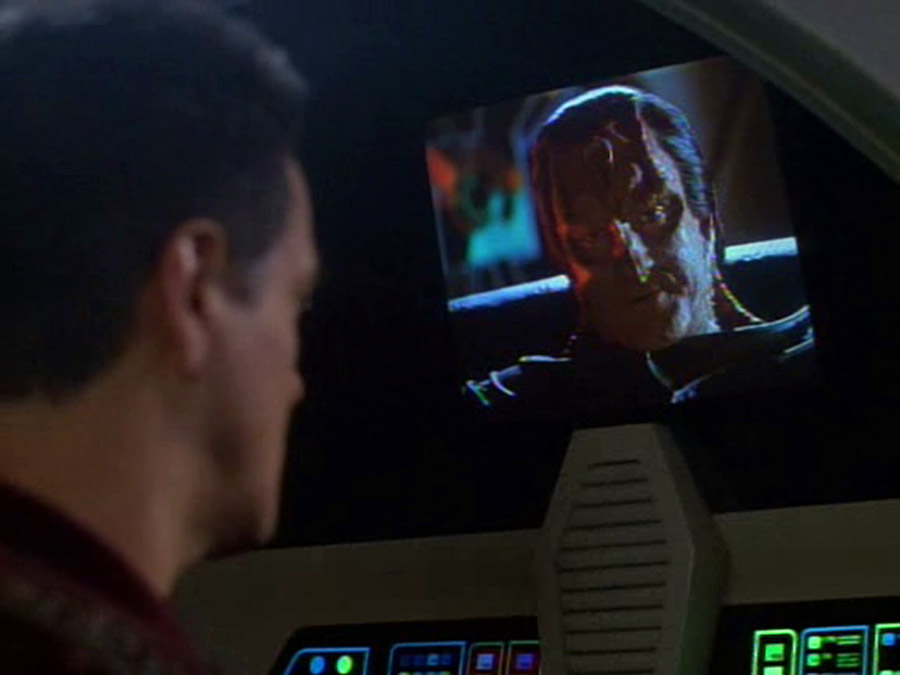
- So the Caretaker has been searching the galaxy for who knows how long and hasn’t found anyone compatible to take over for him and use his technology? Tuvok inspects the Caretaker’s array and reports that he’s able to access the program to send them back home like it’s nothing at all. Seems pretty user friendly! This guy is just making it harder than it needs to be, I think.
- We’ll eventually find out that in addition to Voyager, the Caretaker had also previously brought the Starfleet vessel Equinox to the Delta Quadrant. At this point they’re already in the Delta quadrant, making their way home. Literally nothing about that makes sense.
- The dying Caretaker implores Janeway to find his companion that left. It would only take them until the next season to, and of course she’s totally, inexplicably evil with her own society of evil Ocampa. It’s a bit of a letdown and a weird way to follow up on this potential plot thread.
- So Janeway has a man, and more importantly, a dog. Originally I assumed he was her husband and it isn’t made explicitly clear, but I guess her mentioning “her” house implies they’re not married. Mark would be mentioned here and there, but more importantly, poor puppy lost her mama!
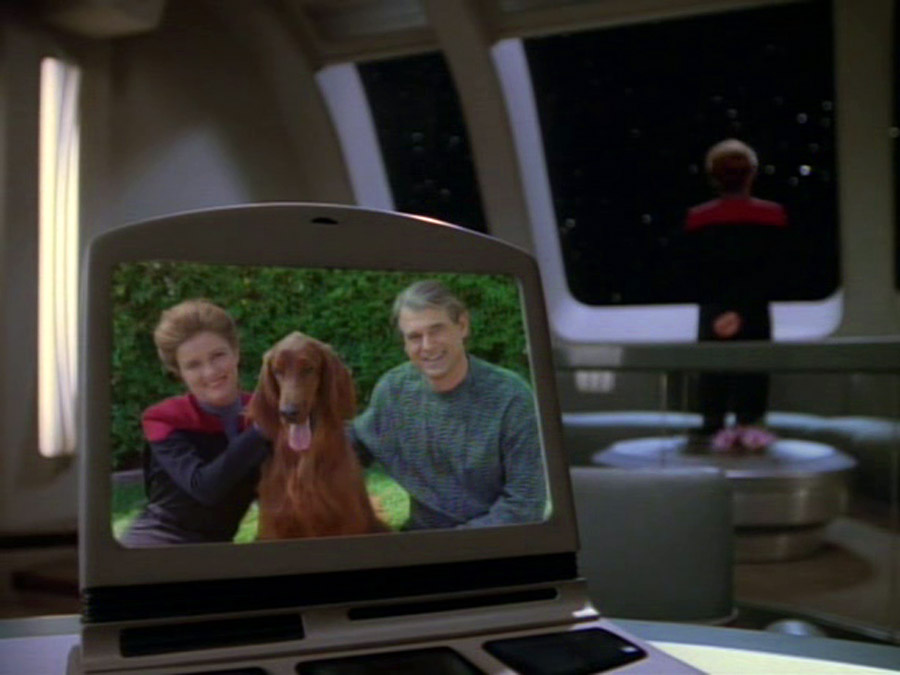
- There’s a whole subplot about Torres and Kim being sent to the Ocampa colony, apparently infected with some disease that manifests as gross tumors. The details are extremely vague – the Caretaker makes some offhand remark about it not being a disease, but a result of being incompatible with him/his technology. Except… as one of the Ocampa explain, everybody who has this not-disease quickly dies from it, so… tomato toMAHto?
Not only that, but after everyone makes it back to Voyager, absolutely no further mention is made of it and Torres and Kim are perfectly fine and healthy for the rest of the episode! The hell? They’re literally dying as they escape, but aboard Voyager they are IMMEDIATELY fine. As well-constructed as the episode is, it completely drops the ball on this plot thread.
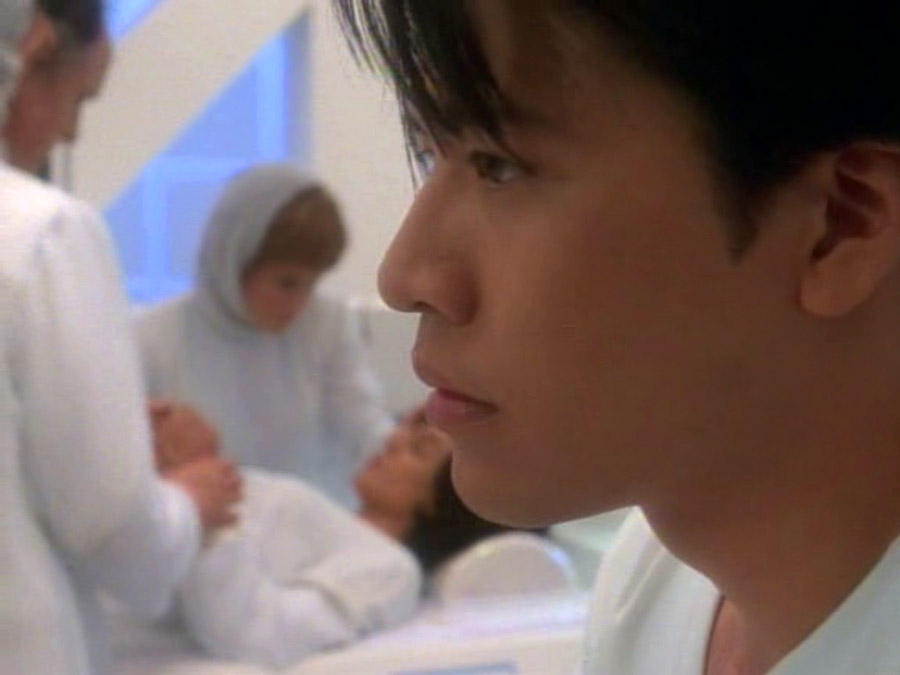
- The Kazon (and Neelix) go nuts over water. Really, water??? You have spaceships! Water is not that hard to find in space! You find a single comet, and you’ve probably got millions of gallons right there. Or a nebula that has trillions. Jesus, these people are idiots.
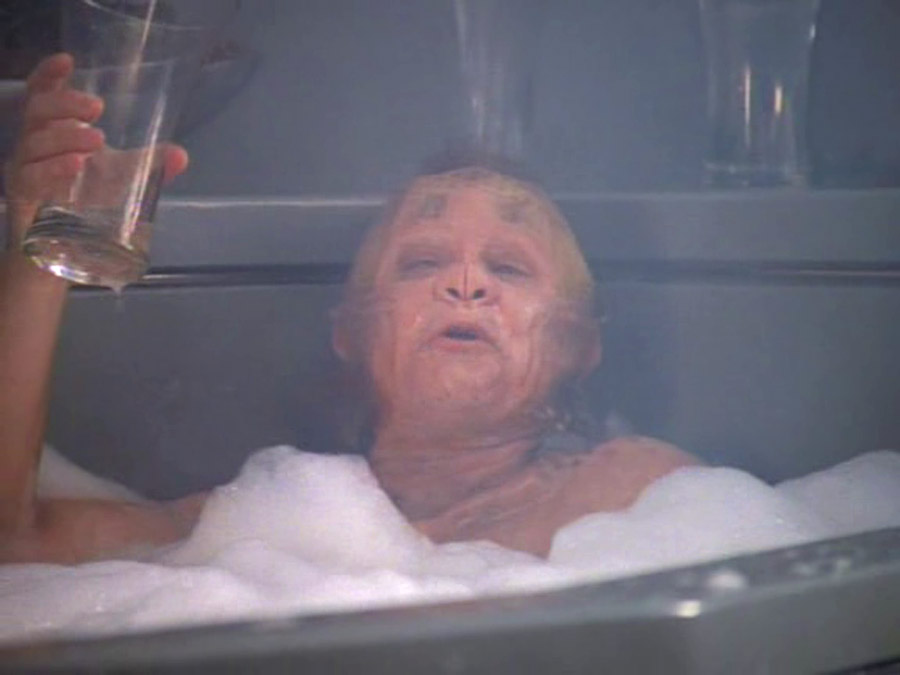
- So how did Kes and Neelix meet? They’re already in a relationship here, but the Ocampa live in a hermetically sealed underground society. As far as we know, this is the first and only time Kes has ever escaped, and she apparently fell immediately into the clutches of the Kazon. Neelix appears to have had significant dealings with the Kazon (since they know and hate him), but the timeline isn’t made clear. After all, Neelix doesn’t just know Kes, but they’re an actual item together. How and when did that happen? When she was a prisoner? That’s… not great.
- Of Tom and Harry – I’m just realizing that although these guys are best buds throughout the whole show, they only get one actual episode dedicated to them that I can remember. It would have been nice to see their friendship explored more in serious ways, rather than just seeing their knucklehead hobbies in the background for comedic effect.
- Oddly, Chakotay’s Maquis ship is never explicitly named. Apparently it’s called the Val Jean. OK.
- I love Chakotay’s “Have one of your cracker-jack Starfleet transporter chiefs keep a lock on me” line. This is DEFINITELY not your grandpa’s Star Trek, sonny boy!
- Voyager’s mechanical warp nacelles are pretty wacky. It seems like it’s different for the sake of being different, which is fine. But I’m imaging how everyone I’ve ever known who owned a convertible eventually had issues with the mechanism breaking, and then I’m mentally scaling that up to gigantic warp engines on a starship. Seems like it’s asking for trouble. As we’ve seen in every other ship design up to this point, engines don’t need to move (into a slightly different position) to work. Is this the 24th century equivalent of hidden headlights, something that was hot for a minute before disappearing?
- Despite the fate of the Ocampa being the impetus of the entire show, we never actually get an update on them after this. Good luck with… all that, I guess.
- Interestingly, the more minimalist warp core design of Voyager with its internal patterns of light hearkens back to the refit Enterprise from The Motion Picture.
- Paris makes a couple offensive “Indian” jokes towards Chakotay, which is just lovely. It’s the only reference in this episode to Chakotay’s heritage, which is overall a very thorny issue of the show. But thankfully one that was mostly ignored after a time.
- Scott MacDonald has played several parts on Star Trek before, the most memorable one probably being Tosk from Deep Space Nine’s “Captive Pursuit.”. He’s a member of Voyager’s crew here, but will never be seen again. The ships’ crew compliment outside of the senior staff was not kept consistent at all throughout the show, and it really, really should have been.
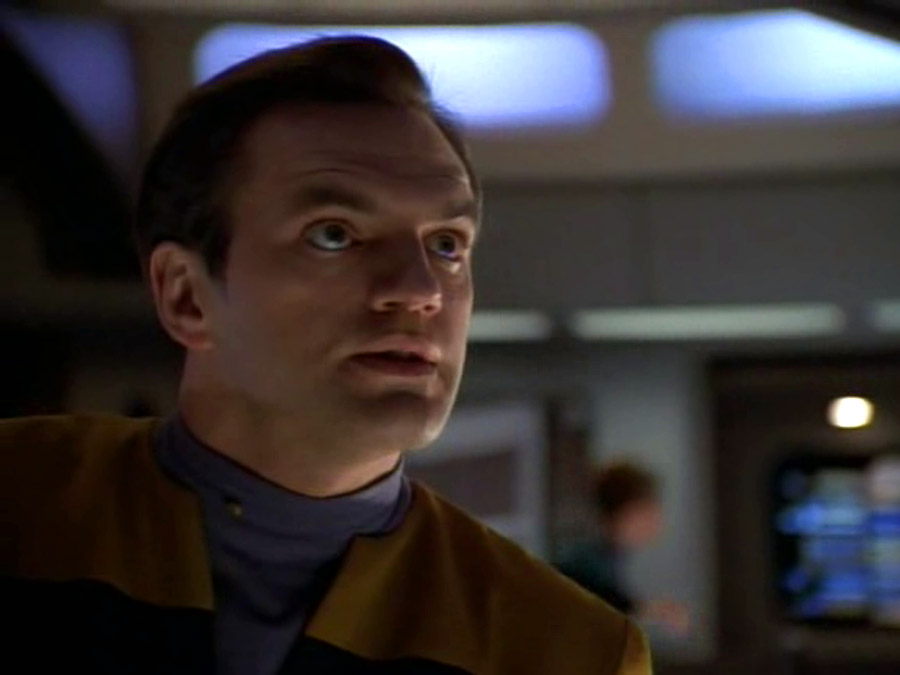
- The unnamed doctor of Voyager is also the same actor who played super soldier Roga Danar. Maybe it’s the same guy and he beat his PTSD to became the healer he always wanted to be… before dying from an exploding computer.
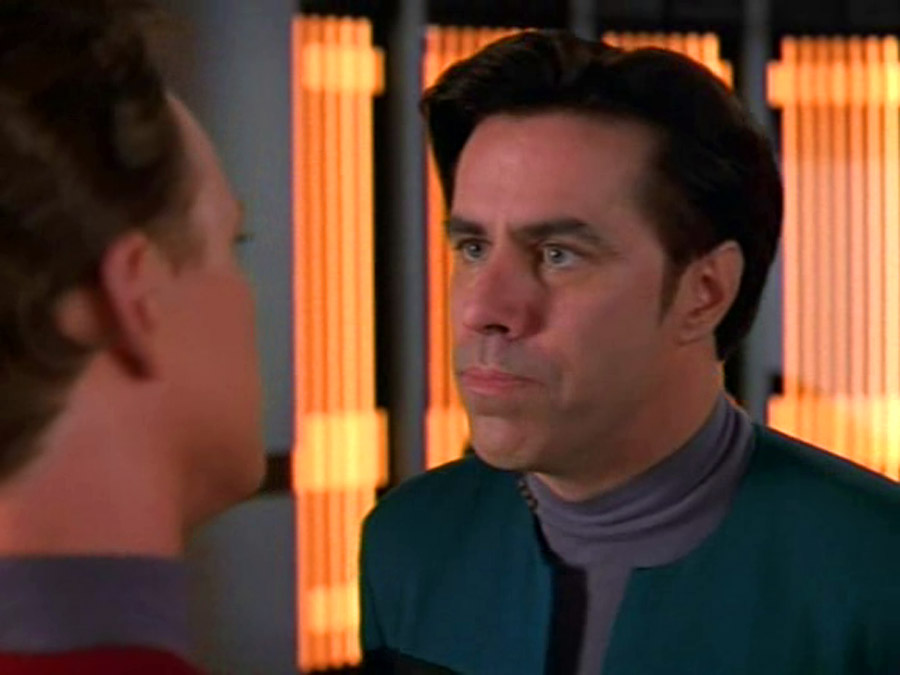
- Presented without context: