


***CONTENT WARNING: Discussion of depression and suicide***
“Mortal Coil”
Star Trek: Voyager – Season 4, Episode 12

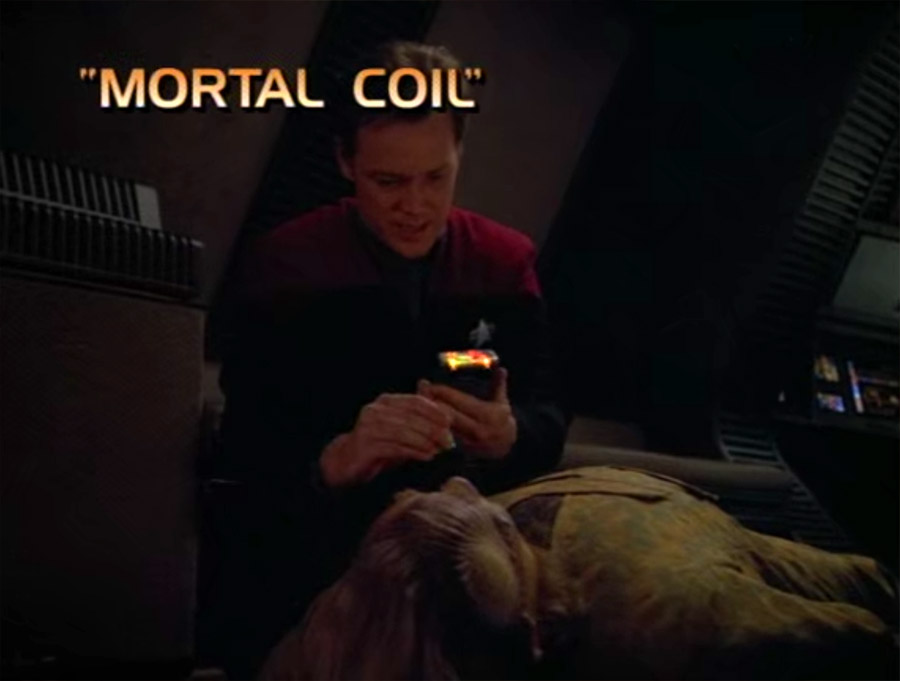
Spiritual crises of characters have been the topics of a handful of Star Trek episodes, but they’re usually of the more philosophical, esoteric kind. Which makes sense, since Trek is a philosophical kind of franchise. They can be interesting to watch, but not relatable on an emotional, gut level. But on a few notable occasions, episodes have really dug into truly emotional and upsetting territory. Deep Space Nine’s “Hard Time,” for example, featured a harrowing plot with a chain of events that leads Chief O’Brien to the brink of suicide. “Mortal Coil” is a similarly gut-wrenching episode that uses a sci-fi hook to tell a very, very real story.
Man, this episode. I’ll emphasize the content warning again, because this is one of the most viscerally upsetting episodes of Voyager, and Trek in general. It’s a painful and difficult hour to watch, but it’s also a compelling story about a very real issue that gives a great and surprising spotlight to an unexpected character.
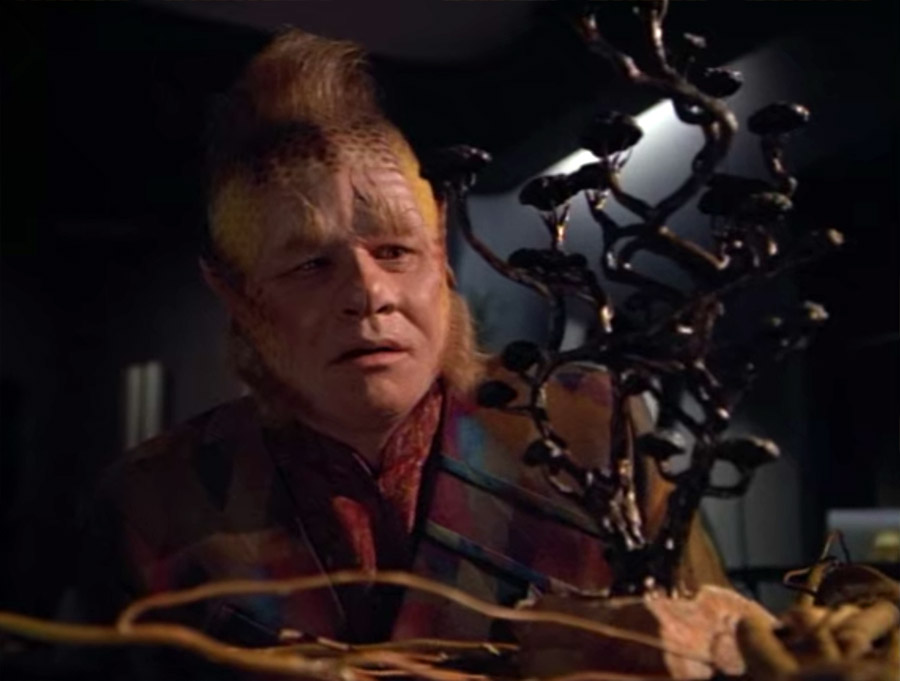
Speaking of, it’s fair to say that Neelix is no one’s favorite character. He doesn’t quite inspire Jar Jar Binks level of vitriol from fans, but it’s perhaps not far off. I’m probably in the minority of not hating Neelix. At worst, he’s cloying, inane, and inessential to most stories. But like Quark did for DS9, Neelix rounded out a cast of mostly Starfleet characters and provided a little alien color to a human-centric ship. Like most of the characters, I don’t think the show exploited his potential to the degree it could have. But Ethan Phillips is a decent actor and when given the opportunity, was able to turn in some good performances, as he does here.
Neelix is a cheery and eager-to-please guy (a little too much for most fans), but there’s some complex and dark parts to his history – namely, the conquering of his planet and the ensuing war that killed most of his friends and family (including his beloved sister Alixia). “Mortal Coil” uses that history as a facet of the spiritual and emotional crisis he endures here. And as with “Hard Time,” the show puts its happiest and most genial character through the emotional wringer for added effect.
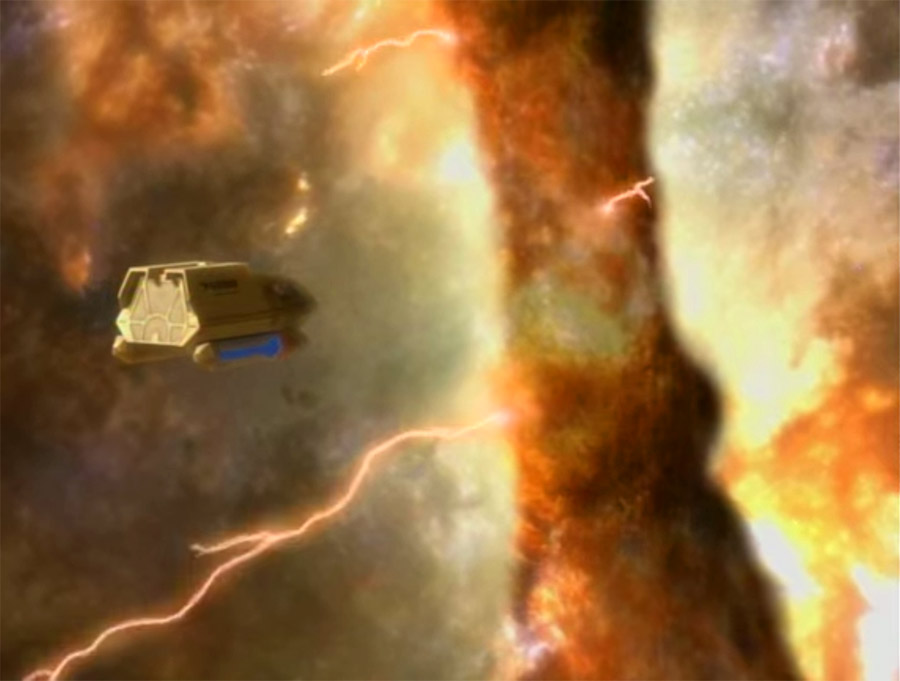
On a shuttlecraft mission with Paris and Chakotay in a nebula, Neelix is struck by an errant energy bolt and dies. Completely and totally dead. Eighteen hours later, when they’re all safely aboard Voyager and starting to make arrangements for his funeral, Seven strolls into sickbay and reveals a medical technique capable of “reactivating” a dead body, even after 18 hours (courtesy of a species the Borg once assimilated and now conveniently contained in Seven’s brain). With an injection of some Borg nanoprobes, Neelix’s necrotic tissues are regenerated and he wakes up, disoriented but otherwise in good shape, all things considered. He’s understandably confused about whether he was actually dead, but Seven bluntly confirms he was.
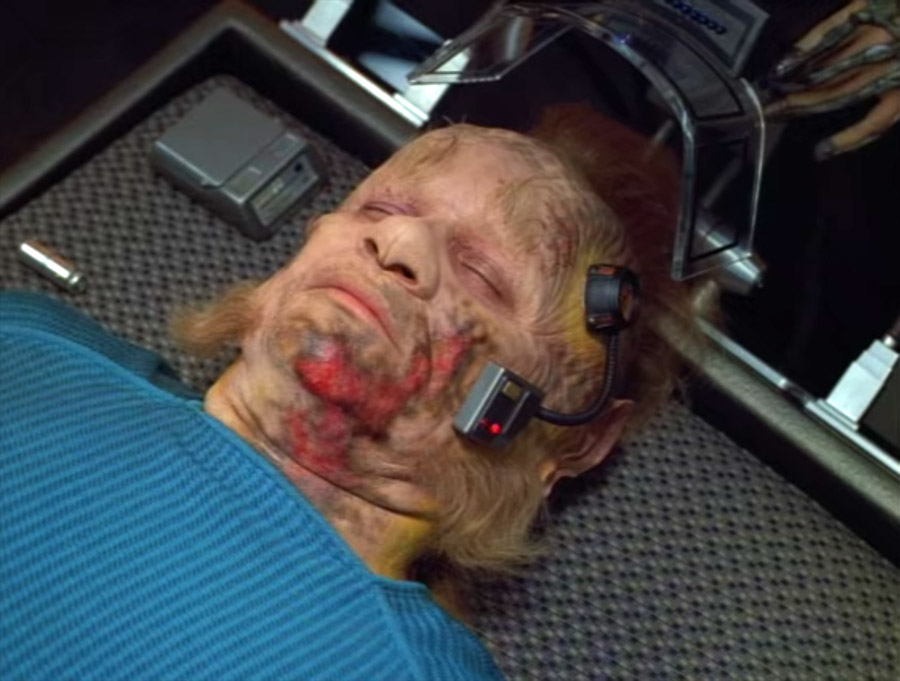
The ability to reanimate a dead body is a subtly horrific idea that goes back to Frankenstein, and it’s one that Deep Space Nine also utilized in one of its most awful episodes “Body Parts” (where a seemingly dead Bareil is miraculously revived). There’s a tiny bit of body horror in “Mortal Coil” – Neelix is understandably disturbed by having Borg technology swimming around in his blood stream. And he must have regular injections of the little buggers to keep his tissues alive until his body can handle things on its own. At one point he has a breakdown where his cells begin to spontaneously necrotise before the Doctor is able to compensate. So he’s mostly alive, but death still seems to haunt his biology, seemingly waiting to snatch him back at a moment’s notice. The grim specter of that doesn’t do much to help his mood, which you can’t really blame him for.
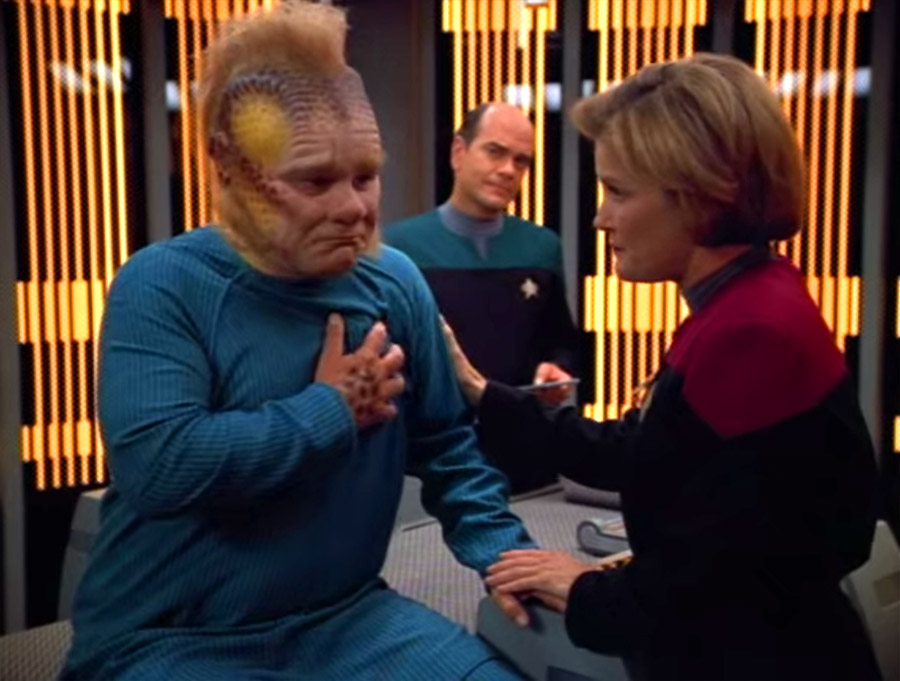
After his resurrection, Neelix is eager to resume his life, but something seems amiss. He accompanies Chakotay to the holodeck, where they investigate what went wrong with the mission. Neelix comes face to face with a holographic simulation of his death, and confides in Chakotay what happened. The problem is, nothing happened. The Talaxians believe in a Great Forest that awaits them in the afterlife where all their deceased friends and family await them. As Neelix says later in the episode, it’s a belief that has kept him going after seeing so much horror and death in his peoples’ war. But when he died, he didn’t visit the Great Forest and didn’t see any of his loved ones. There’s nothing waiting for him after death, and everyone he lost is truly gone. It’s rough.
A Talaxian holiday festival that Neelix had been preparing comes at the worst possible time and seems to cruelly mock him with tidings of family and friendship. The gathered crew salute Neelix and give thanks that they have him back, and Phillips shines as he’s barely able to hold back the angst and turmoil he’s feeling over it all.
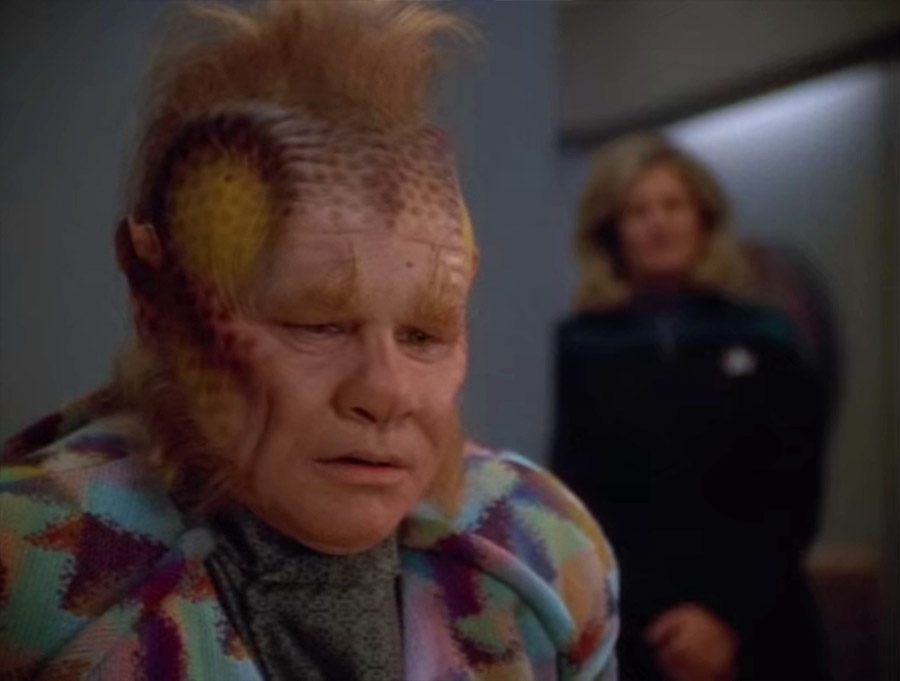
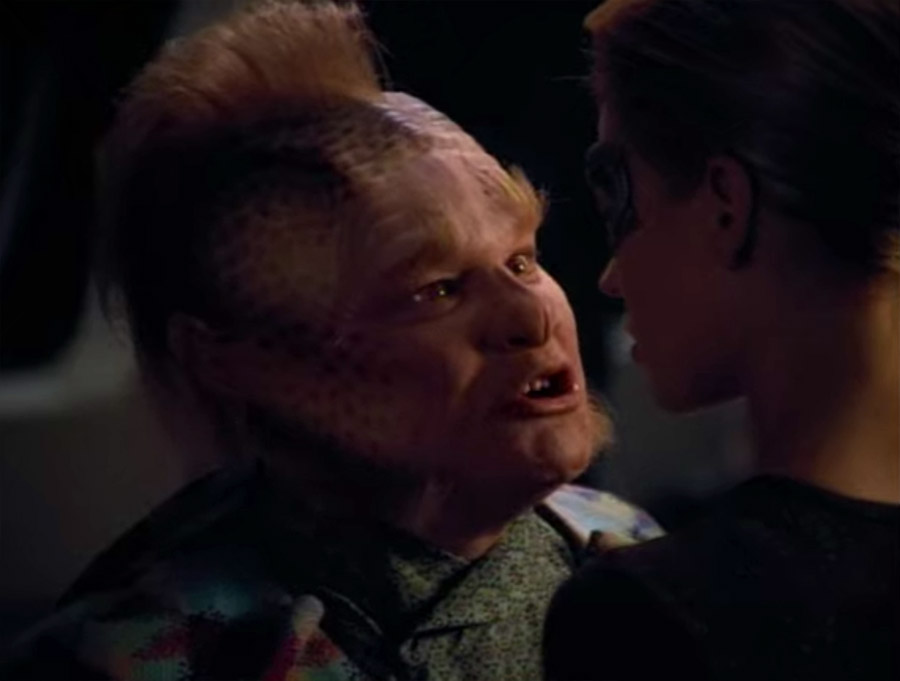
Things deteriorate from there, and as Seven drops by to take a medical scan of his progress, Neelix lashes out at her. He doesn’t feel like himself, and doesn’t even feel totally alive anymore. Screaming at her (and even slapping the tricorder out of her hand), he blames her for bringing him back to life when he didn’t ask to be (“You were dead at the time,” she replies flatly). The raw anger and frustration is shocking, but quickly gives way to the aforementioned breakdown of his body. His cells start literally dying right then and there (which is pretty grisly), but the Doctor and Seven are able to modify the nanoprobes to compensate. Neelix asks Chakotay to take him on a vision quest so that he can understand his feelings.
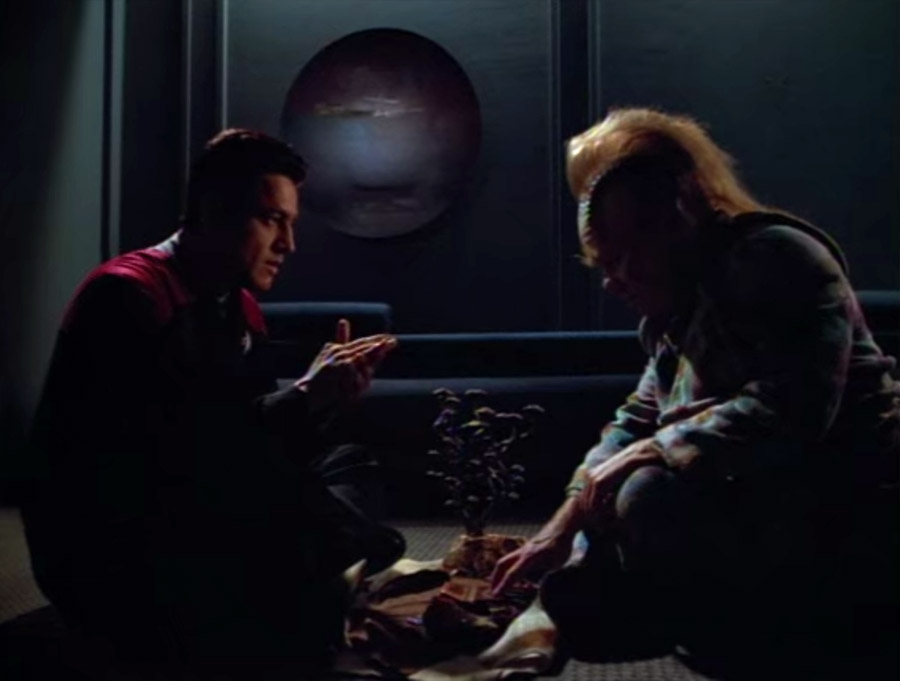
On his quest, Neelix finds his sister Alixia in the Great Forest, but she mocks his beliefs in the afterlife as cover for his fear of death. “Then what’s the point of living?” he asks. “There isn’t any,” she tells him. It’s this idea that’s at the core of his turmoil and one that transcends all the sci-fi trappings of the story. And it hits like an emotional sledgehammer. She melts/decomposes before his eyes, and the visual is hideous.

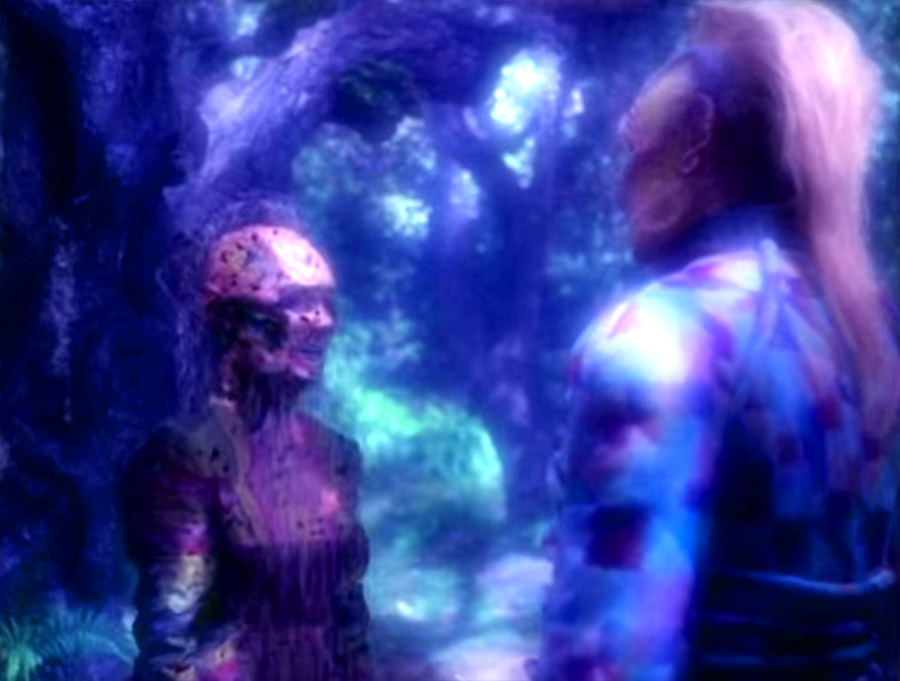
Even worse, Neelix sees a vision of his own dead body telling him that he knows what he needs to do, in addition to the entire crew agreeing.
Hoo boy. It’s fucking rough.
It’s a grim personification of the actual kinds of suicidal thoughts and voices people experience. It’s not something that I’ve had to deal with, fortunately. Much of what happens in this episode was upsetting for me to watch, so I can’t imagine what someone who suffers through suicidal thoughts would experience watching this.
One of the most painful and ironic components of suicide is the apparent peace its victims make after committing themselves to the act. True to that, Neelix visits Seven to apologize for his outburst and reassure her that she’s a valued and liked member of the crew. It’s a distressing scene, because Seven doesn’t have the emotional experience or awareness to understand what’s going on. She’s confused when Neelix slips and refers to himself in the past tense, and simply returns his farewell when he says “Goodbye” and leaves.
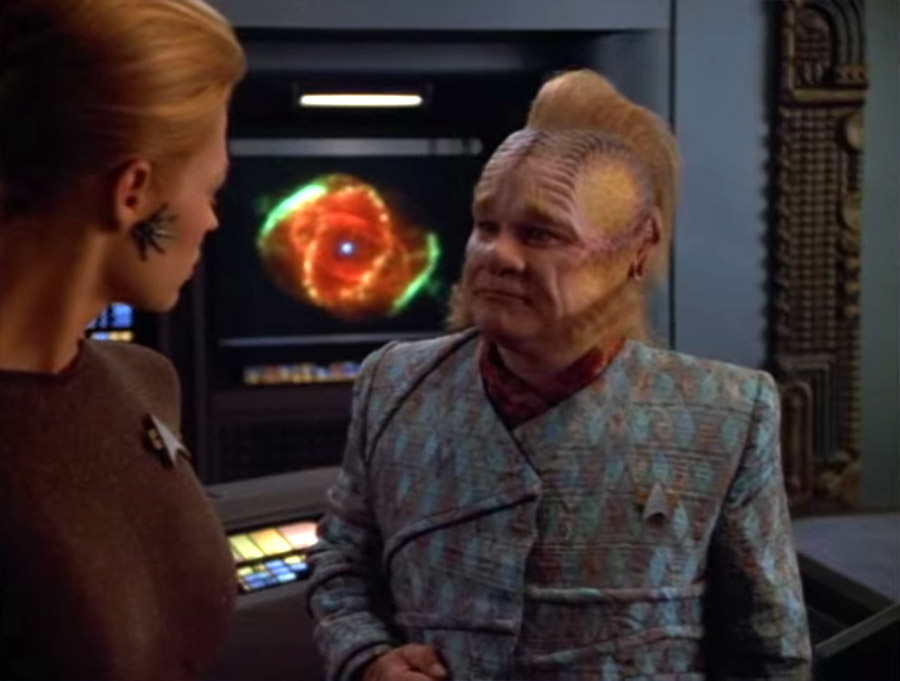
Chakotay visits Neelix in the mess hall as he’s cleaning up. He’s supposed to have been meeting with Chakotay so that they can discuss and analyze what he saw in his vision quest, but Neelix hasn’t been showing up. He denies any pain he’s feeling, and agrees to meet with the Commander later. Hanging up his apron and turning to survey his work space, he shuts off the lights and leaves. He finishes up recording a suicide note expressing his warm thoughts and thanks to the crew, and heads to the transporter room.
Did I mention this is fucking rough?
In “Hard Time,” Miles almost pulls the trigger of the phaser he’s aiming at his head, but Bashir is able to talk him down. The crazier thing about “Mortal Coil” is that Neelix initiates the transporter to beam himself into the nebula that he died in earlier. It’s only because the crew is able to stop/reverse it that he doesn’t succeed. Chakotay appears in the transporter room, but Neelix has set up his tricorder to remote activate it. Chakotay tries to talk Neelix down from his (literal, transporter) ledge, but he seems adamant about ending his life. He reveals that with everything he’s gone through, seeing his family again was the thing that kept him going and now that hope is gone.
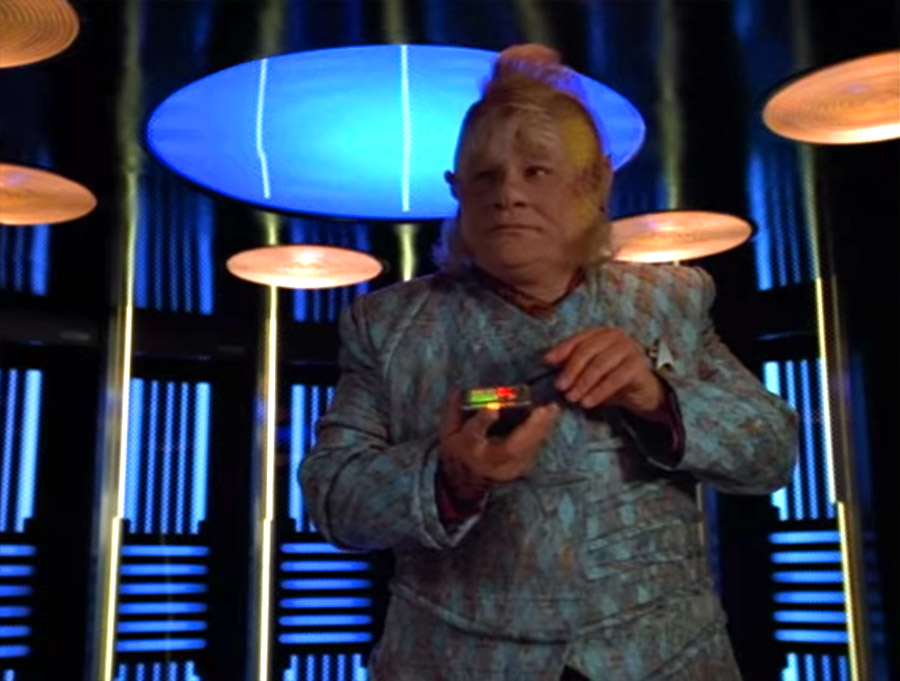
The thing that does keep him from pushing the button? Naomi Wildman’s mom calling him, asking Neelix to help get her daughter to sleep again. True to real life, personal connections are the thing that often keep people from going through with suicide. Despite what someone thinks of themself or what feelings they have about their own life, the pain caused to others can be a potent reason to not end their life. “Answer her!” Chakotay demands. He reminds Neelix of all the things he does for everyone – not just the duties he performs, but the way he makes the crew feel, and it’s a powerful scene.
Neelix backs off from the ledge, and soon he’s tucking Naomi into bed. She asks if he was sick, and he says he was but is feeling better. “Did a monster get you?” she asks. Neelix pauses, and says “Yes, I suppose so. But I chased him away.”
Oof.
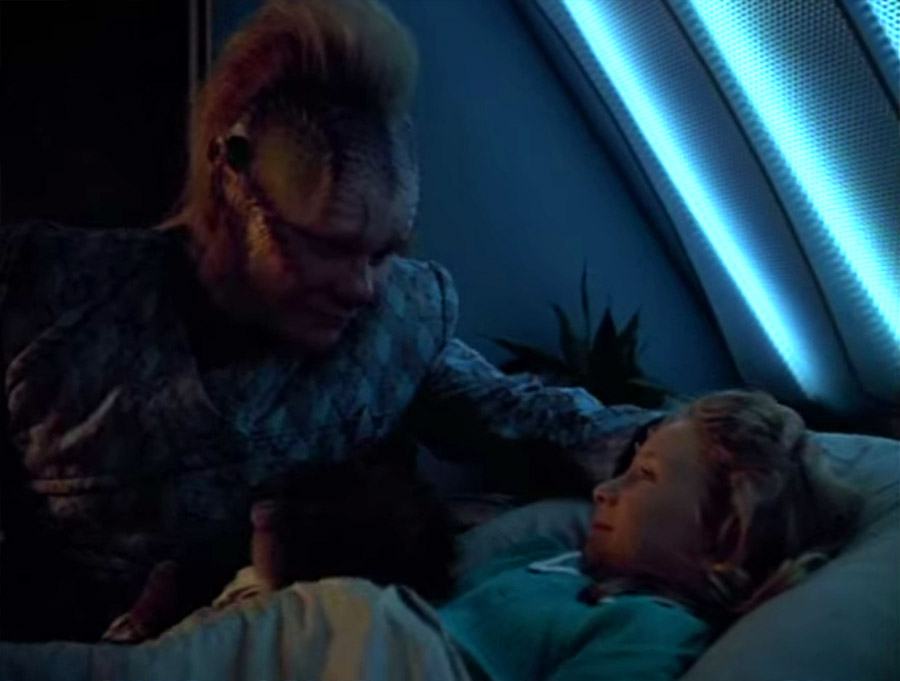
One of the things I like about Star Trek (and science fiction) is how it uses the prism of the genre to spotlight issues and topics, translating them into fantastical situations that can make them more digestible. But sometimes Trek knows well enough to keep the sci-fi dressings to a minimum and tell a raw and emotional story about people. “Mortal Coil” is a prime example, and one of the most raw and memorable stories Trek has ever told. It handles the distressing topic of suicide with an impressive degree of nuance and realism. What spurns Neelix’s crisis is a far-fetched plot device, but everything he feels afterward and his drive to end his life is stuff that too many people unfortunately go through. It’s a reminder of the personal attachments in his life that help resolve the crisis. We’re all needed, loved, and valuable. It’s a very strong and emotional message at the center of this episode, and something we all need to remember in our own darkest hours.
Stray Observations:
- This is a very dark, heavy episode but we do get the amusing anecdote that the Borg encountered the Kazon but chose not to assimilate them. “Why assimilate a species that would detract from perfection?” Indeed, the Borg. Indeed. Real “brain eating zombies rejecting Homer” moment there.
- Neelix had both of his lungs stolen by Vidiians way back in Season 1; guy can’t catch a break! The Doctor states here he might need continual injections of nanoprobes to keep him alive, but it’s never mentioned again, so we can assume his body healed enough on its own.
- “You are a peculiar creature, Neelix.” Jeri Ryan’s line deliveries are always the best – a perfect blend of awe and disgust.
- Tuvok and Seven get a nice scene where she ruminates on what death means to the Borg. Every drone’s memories are kept alive in the Collective’s mind, so in a sense every Borg remains immortal. “Fascinating. That must be a great relief,” Tuvok notes. Seven agrees, but Ryan’s reading of the line suggests much more mixed emotion.
- The ability to revive a body 18 hours after its death is a Very Big Deal. Will this ever get mentioned again or revolutionize 24th century medicine as we know it? You can probably guess the answer to both questions.
- The conclusion of “Hard Time” mentioned antidepressants and therapy as part of O’Brien’s recovery. I wish we could have gotten a mention of that here. The mental health crisis Neelix goes through here is intense, and there’s the implication that he has a lot of unresolved trauma from the war and his family’s death that’s come to a head here. His characteristically cheery demeanor could be interpreted as a coping mechanism to avoid dealing with any of that, and it would have been interesting territory to explore in another episode, but alas.
- I think this was the last instance of Chakotay’s vision quest device. Which is probably for the best, but it’s interesting how similar it was to the Orb experiences on Deep Space Nine. Sometimes, even on Star Trek, you just need a mystical doohickey to move the plot along, y’know?
- The nebula mission was to retrieve some protomatter, an unstable substance mentioned in Star Trek III, and what was responsible for Planet Genesis tearing itself apart. Someone needs to make a subspace PSA. Protomatter: not even once, y’all.