“Sons of Mogh”
(Star Trek: Deep Space Nine – Season 4, Episode 15)

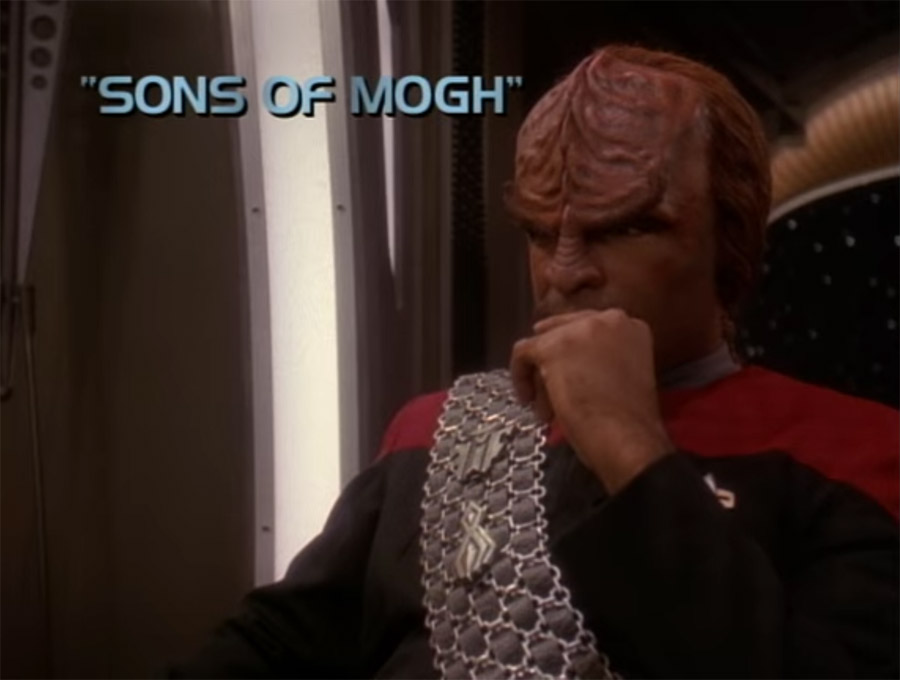
Worf has always been a tragic figure. Orphaned at a young age when his parents were killed, he was rescued and raised by humans, growing up in a culture where he was an outsider – an alien. And as been demonstrated many times, he is largely considered alien to the Klingons as well, because of his Starfleet uniform, his time among humans, and his human-influenced values. Furthermore, he has made himself an outcast from Klingon society twice now – once when he accepted discommendation for his father’s crimes in The Next Generation, and when he turned his back on Gowron during the Klingon’s invasion of Cardassia. Not to mention the mother of his son getting murdered (I’m still sore about that, nearly 30 years later). Fate continues to place him in situations where there are no easy choices, and which his honor and values demand that he often make the most difficult decision.
The tragedy of his situation in “Sons of Mogh” is that his choices have not only affected him, but his brother Kurn, as well as Kurn’s family. As a solitary person, it’s much easier to bear the burden of disgrace when it is focused only on you. But it gets much more complicated when others are hurt by your actions.
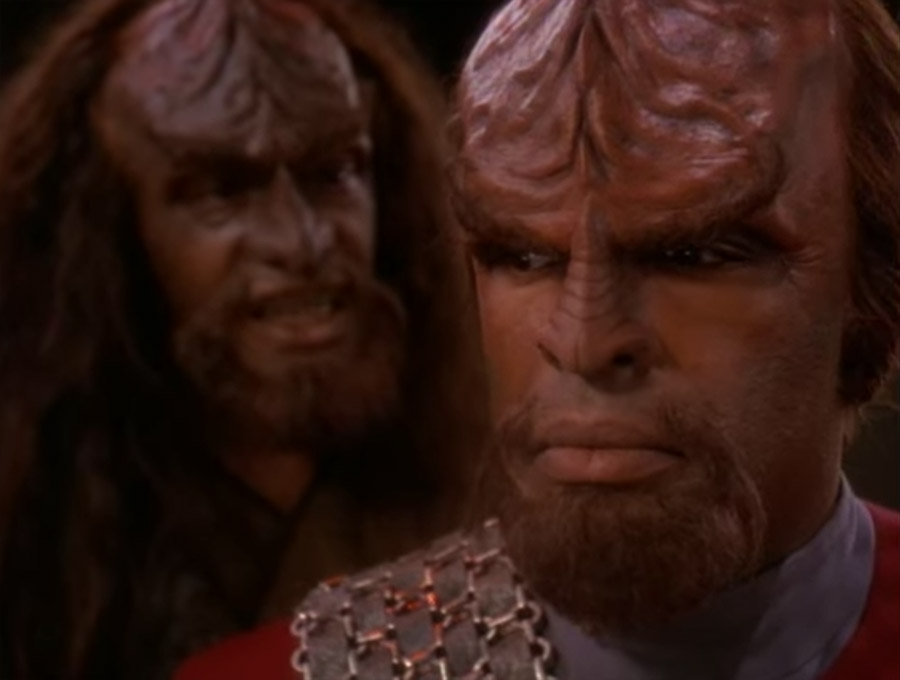
And this is what we learn has happened when a drunken Kurn shows up on Deep Space Nine to see Worf. Standing against Gowron has made not only Worf an outcast, but his whole family/house. Their properties have been seized, ranks have been stripped, their High Council seat lost, and all honor/standing in society rescinded. Kurn has been left with nothing because of Worf, which is a rough deal. It’s a credit to the nuance of the show that the perspectives of both brothers carry equal weight. Worf had no choice but to not take part in an ill-advised and unsanctioned invasion for reasons that turned out to be false (the Founders hadn’t taken over Cardassia as the Klingons assumed… yet). But Kurn’s plight engenders a lot of sympathy – he has done nothing wrong and has been punished for a choice someone else made. The real villain is the traditional rigidity and viciousness of Klingon society, but there’s no vengeance or retribution to be had against that foe. There’s only anger between two brothers.
The tension between the two has been present since The Next Generation. Kurn is 100% Klingon through-and-through, and has always had difficulty understanding Worf. Although Worf has studied and reveres Klingon culture, his worldview has undeniably been shaped by his time among humans and Starfleet. Although he is no scientist, the dispassionate investigative philosophy of Starfleet is ingrained in him and further bolsters his outsider status. And this is all on top of the natural differences and lack of common ground siblings can have when they’re raised together. Personally, I’ve never really known anyone who’s been close to their sibling(s). The nature of the relationship seems to breed an almost magnetic repulsion.
Kurn is less nuanced in his worldview, and conforms to the blunt and often brutal practices of Klingon culture, which in this case offers a straightforward way of resolving his dilemma – ritual murder. Kurn can earn back his honor in the afterlife if the man who took it away – Worf – ceremonially ends his life.
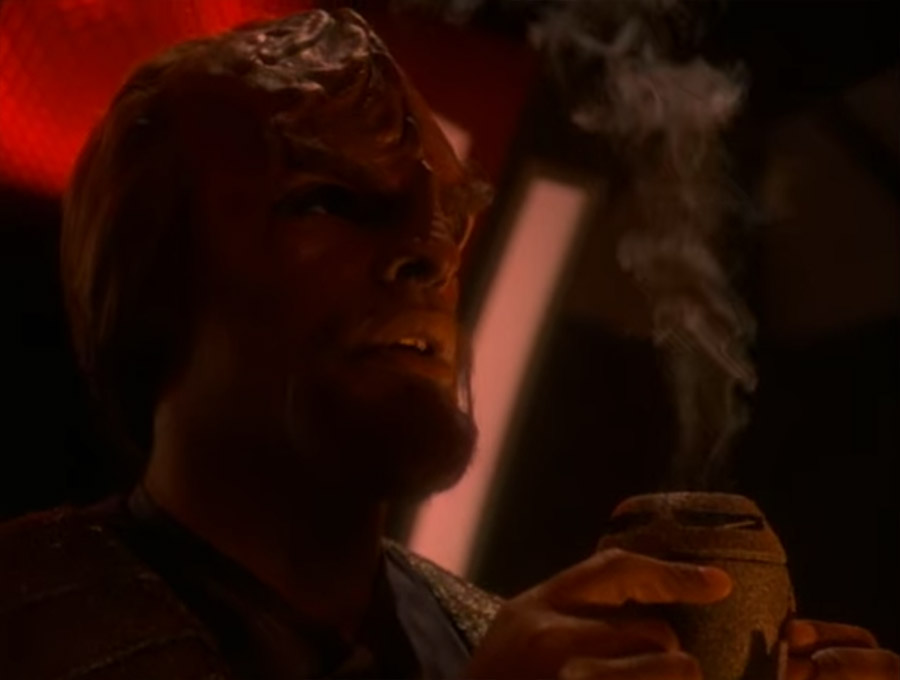
One of the interesting details in the development of this story was that the episode was originally about Worf wrestling with the decision to grant Kurn’s request. But the writers quickly realized that Worf, ever the good Klingon, wouldn’t hesitate to kill his brother honorably. As mentioned in my recap of “The House of Quark,” one of the pleasures of Deep Space Nine is that it prioritizes alien perspectives and cultures. The episode makes no judgement about whether Worf killing Kurn is morally right or wrong; to all parties concerned, there’s no issue. Accordingly, the scene does not shy away from the brutal procedure of the ritual, graphically depicting Worf plunging the dagger into Kurn’s chest (complete with a lovely close up of it buried in there). But of course the ritual doesn’t stay between the two brothers – Dax is able to deduce what Worf is doing, and she and Odo interrupt the ritual to save Kurn’s life.
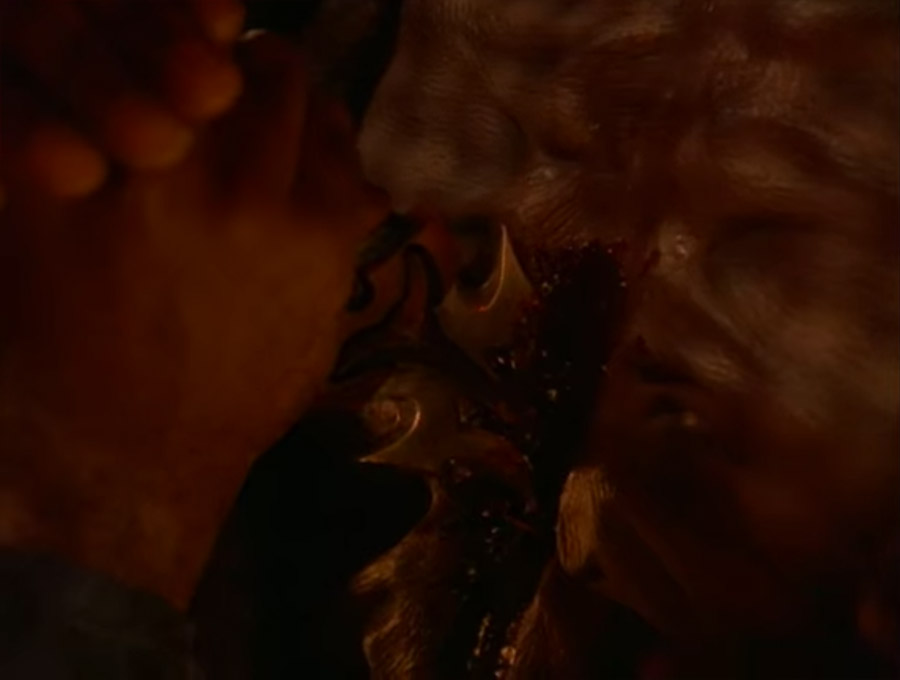
The episode thus becomes about the aftermath of that twist, with Worf and Kurn having to deal with the fallout of their situation. It highlights the strength of Deep Space Nine, since it has always been a show about consequences and exploring the long term effects of its characters’ decisions. Worf tried the easy choice, but because the universe hates him, it doesn’t work and he has to find another, far more difficult way to resolve the problem of his brother.
His first idea is to make Kurn a security deputy for Odo, which works for about an hour until Kurn attempts to suicide himself when an alien pulls a gun on him. Odo immediately dismisses him from the Bajoran Manila Militia, and he and Worf are back where they started. Kurn epitomizes the rigidity and inflexibility typical of a lot of Klingons – he has no real desire to do anything with his life at this point, since in his mind it has already ended. In accordance with Klingon culture, he is deferential to his elder brother, and is resigned to do whatever Worf tells him to.
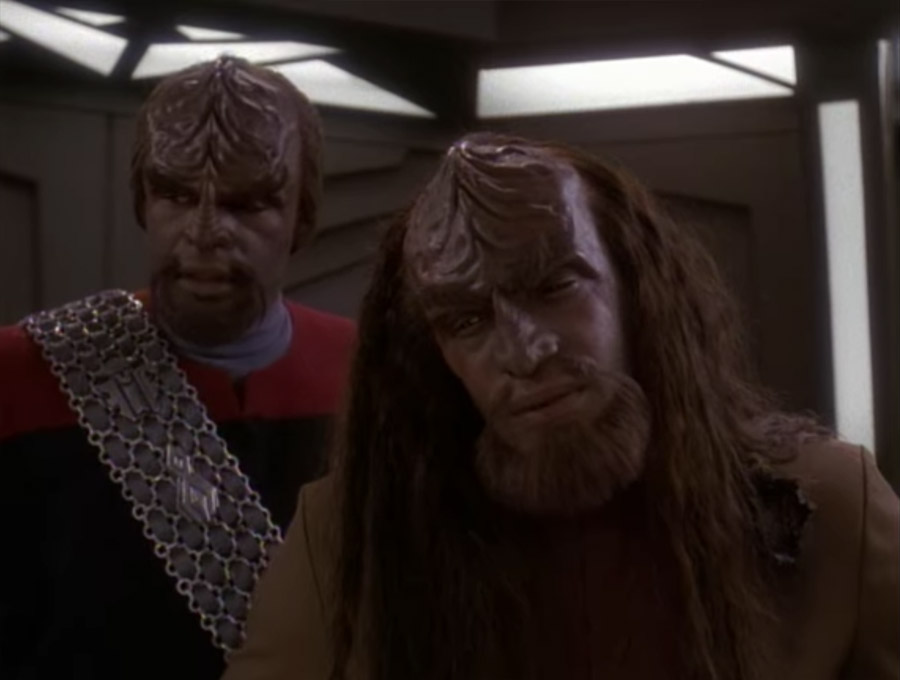
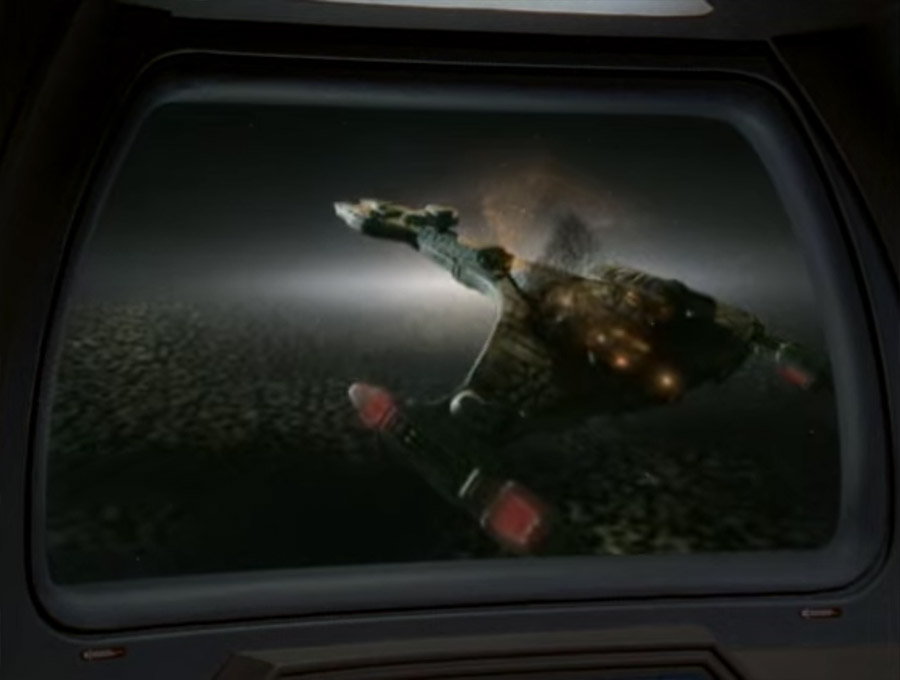
The subplot of the episode dovetails nicely with Worf’s story and shows the exciting range of new stories that the Klingon conflict provides the show. While coming home in a runabout, Kira and O’Brien witness a mysterious explosion right outside Bajoran space, followed by a Klingon ship decloaking and curtly telling them to scram. Returning later with the Defiant, they witness another mysterious explosion, followed by a decloaked Klingon ship with a huge hole blown in it. The crew deduces that the Klingons are using cloaked bombs to mine the space surrounding Bajor in order to cut Deep Space Nine off from the rest of the Federation. The crew having to deal with Klingon schemes hearkens back to The Original Series, which often saw Kirk’s crew thwarting the Klingons’ evil plans. Despite the Klingons’ bluntness and seeming lack of tact, they prove to be challenging opponents in their deviousness and strength of resolve.
With the damaged ship towed back to DS9, Worf persuades Kurn to help him infiltrate it to get intel about the minefields. Despite Kurn’s reticence to talk about his thoughts and feelings like a sissy human, Worf gets Kurn to admit that he also opposed Gowron’s decision to make an enemy of the Federation. There’s a certain ridiculousness to the fact that Worf and Kurn both agree that Gowron is wrong about the Federation being weak, and that war could spell doom for the Klingon Empire. It’s only because of Kurn’s deference to authority and loyalty to his people that it requires such teeth pulling to say out loud. He has a limited perspective because of his background, but Worf’s worldview is broader and he is able to question the situation without fear of disloyalty.
A key bit of dialogue from the scene is from Worf: “Our people may have turned our backs on us, but we have not turned our backs on them.” It’s a great line, because it tells you everything you need to know about Worf. His honor and nobility are absolute, and he always puts the greater good above his own, especially when it comes to the Klingon Empire. Spock famously said that the needs of the many outweigh the needs of the one, and Worf embodies that credo admirably, tempered with a bit of trademark Klingon fatalism. He’s always done what is best for his people with unrelenting stoicism, even as they’re kicking and spitting on him.
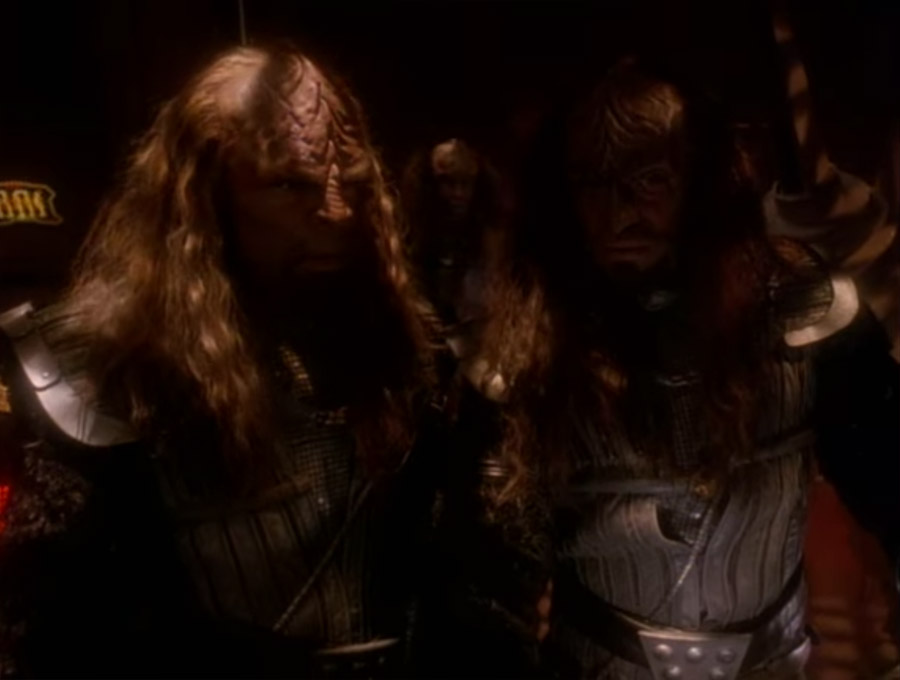
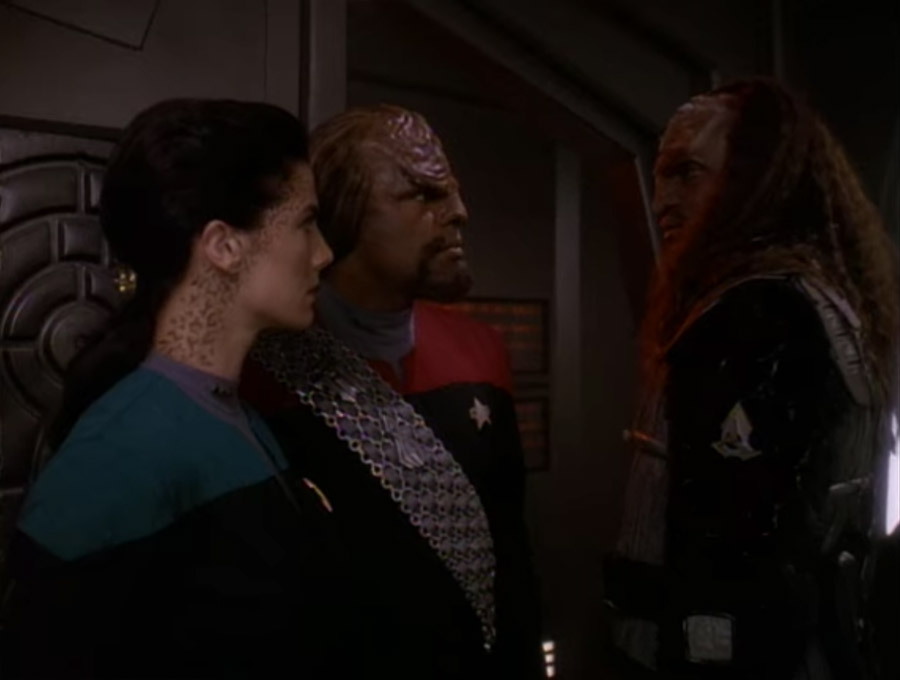
Under disguise, Worf and Kurn sneak aboard the Klingon ship and find the data concerning the cloaked minefield. But of course something has to go wrong, and a junior officer catches them in the act. Kurn is forced to kill him, his finely tuned warrior spider sense having deduced that the guy was actually going to kill Worf while pretending to assist him. Worf later admits to Dax that despite his best efforts at being a true Klingon and his desire to live with them someday, he realizes that he has no place among them, and that Starfleet is where he belongs. It’s an additional layer of tragedy that the episode tosses onto Worf (and some great plot-characterization interplay that is emblematic of Deep Space Nine). Worf can’t help but see the ritual he undertook as murder now, and finds himself out of options.
What happens next is… controversial, to say the least.
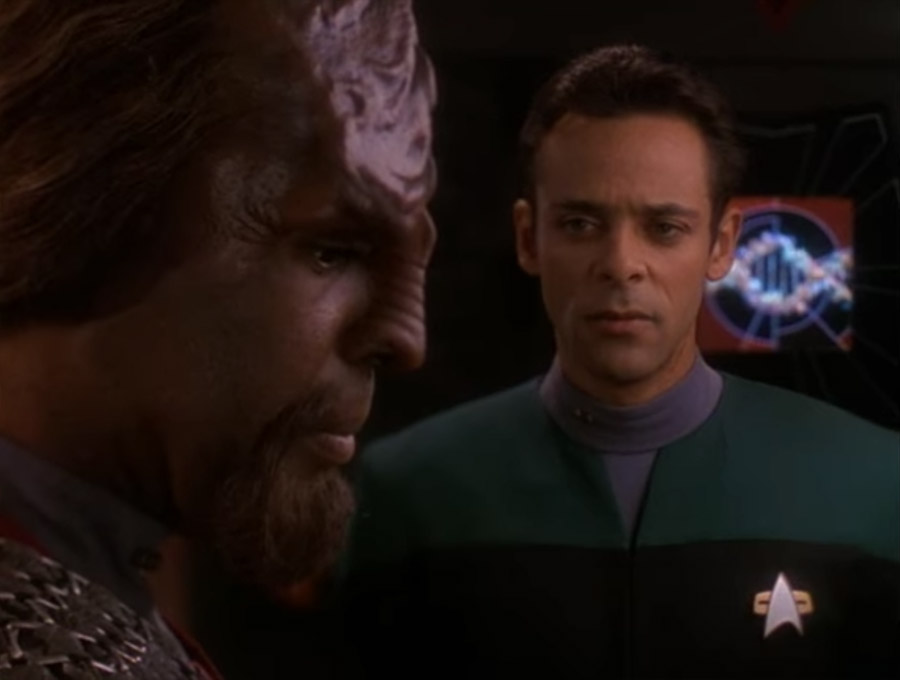
The episode does a great job of setting up a Kobayashi Maru situation for Worf regarding his brother. His solution ends up being colossally tragic (as if he haven’t had enough of that), but also incredibly fucked up and strains hull story credibility by 250%. It certainly makes the episode memorable and very sad, but to this day I still don’t know what to make of it.
Casually wondering about suicide (yikes) and with no worthwhile life of his own left (especially after killing a fellow Klingon doing his duty), Kurn drunkenly expresses his love for his brother, and his regret that they weren’t raised together – either by humans or Klingons (it’s interesting that in his inebriated state he begins to question his culture’s values). And he finally acknowledges that he considers Worf an honorable man. It’s a nice and sad scene, and Tony Todd is especially good in it. There is finally a kernel of understanding between the two long lost brothers, and a tiny bit of validation for our tragic hero Worf.
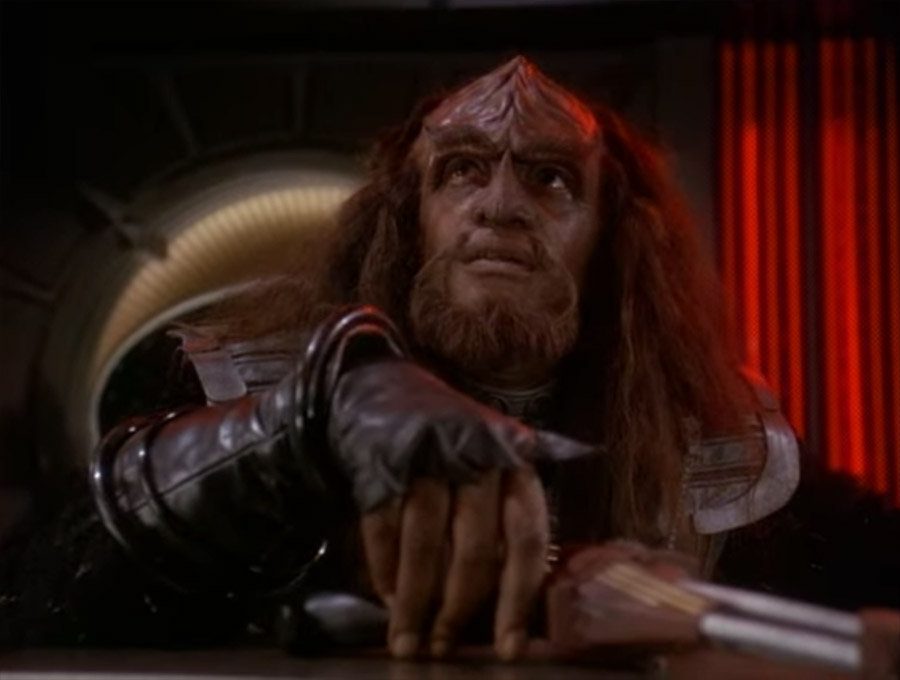
Worf’s solution to give Kurn his life back is to kill him – medically, through reconstructive surgery and memory wiping. He asks a family friend to take Kurn in as Rodek, telling him that an accident has destroyed his memories. It’s crazy. Kurn emphasizes over and over throughout the episode that his life is in Worf’s hands, which helps to ethically square the resolution somewhat. And Kurn does flirt with suicide multiple times, so his life is in danger. But still. It’s a bold and shocking end to the episode, and the way that Worf half-kills his brother is quietly horrific.
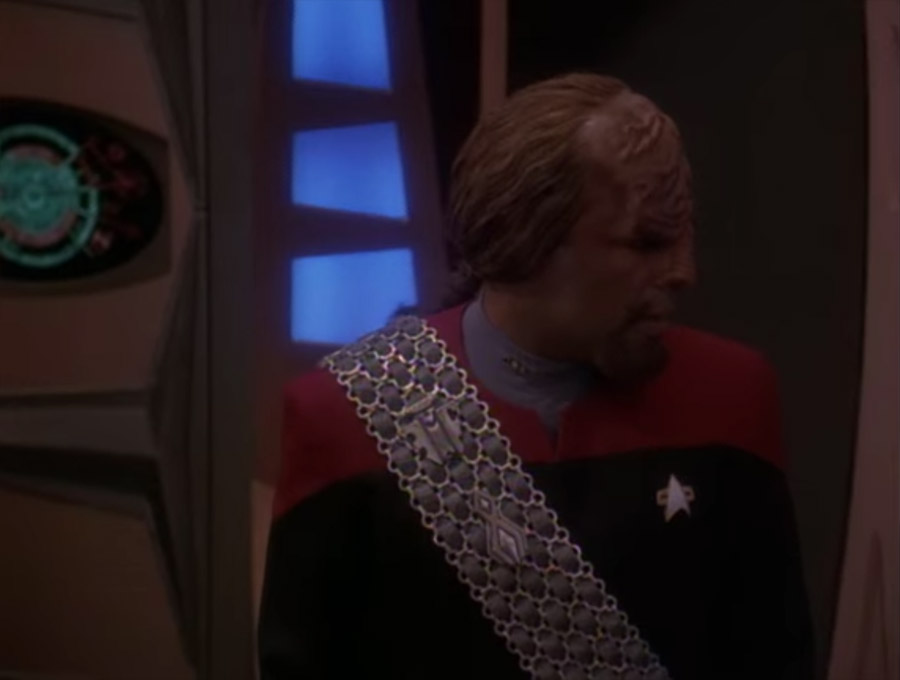
The episode delivers one last emotional gut punch as Rodek wakes up and leaves the infirmary to start his new life. He asks if Worf is part of his family, to which Worf replies, “I have no family.” (UGH. Full bat’leth strike to the feels) As Worf walks out and the infirmary doors close behind him, his stoicism wavers ever so slightly and his shoulders sag from the unbearable weight of loss he has suffered. It’s some great subtle physical acting from Dorn, and there’s something about the way he looks back over his shoulder that gets me, back at the life and family he could’ve had if fate had been kinder – loving parents and brother (as well as a mate?), a proud house. An overall simpler and easier life among his own people could have been his. But it’s now gone, closed shut like those big doors behind him. The only way for Worf now is forward, and he walks off, shouldering the burden as he always has – alone.
Stray Observations:
- So, as far as Rodek is concerned, I just don’t see how this works out at all, realistically. There is absolutely zero evidence that he ever existed – no photos, trinkets, stories, official records, nothing. Kurn isn’t an idiot, and Rodek won’t be one either, so I don’t see how this fabrication doesn’t fall apart very quickly. I’m doing a lot of over-thinking and Star Trek is pretty fantastical, but this doesn’t seem to pass any minimal credibility.
- The details of Worf’s extended Klingon family have always been pretty vague. Alexander was mentioned as having cousins in one episode of TNG, so presumably those are Kurn’s kids? If Kurn is married and has a family of his own, there has been no explicit mention of it. If so, I guess they’re going to have to fend for themselves? The lack of detail in this regard is a bit noticeable – who precisely is “the family” outside of these two knuckleheads?
- FURTHERMORE! It was never mentioned after his initial appearance, but Kurn does have an adopted Klingon family who raised him until his age of ascension. How do they fit into all of this? Could he not have rejoined them to regain his honor?
- Speaking of adopted families we forgot about… how about Worf’s? I’m sure his mom’s Russian heart would be broken if she heard his “I have no family” guff. And, uh… don’t you have a son, big guy? No? Oh, my mistake. I must be thinking of a different Klingon Starfleet Lieutenant Worf.
- Trek has always been kind of fast and loose with legal consequences (especially where Worf is concerned), but… Worf tried to kill a guy. Odo says, “He better live, or you’ll be in big doo doo” (actual quote, look it up). Because attempted murder is not a crime? Sisko yells at him good and doesn’t do much else, which is extraordinarily charitable.
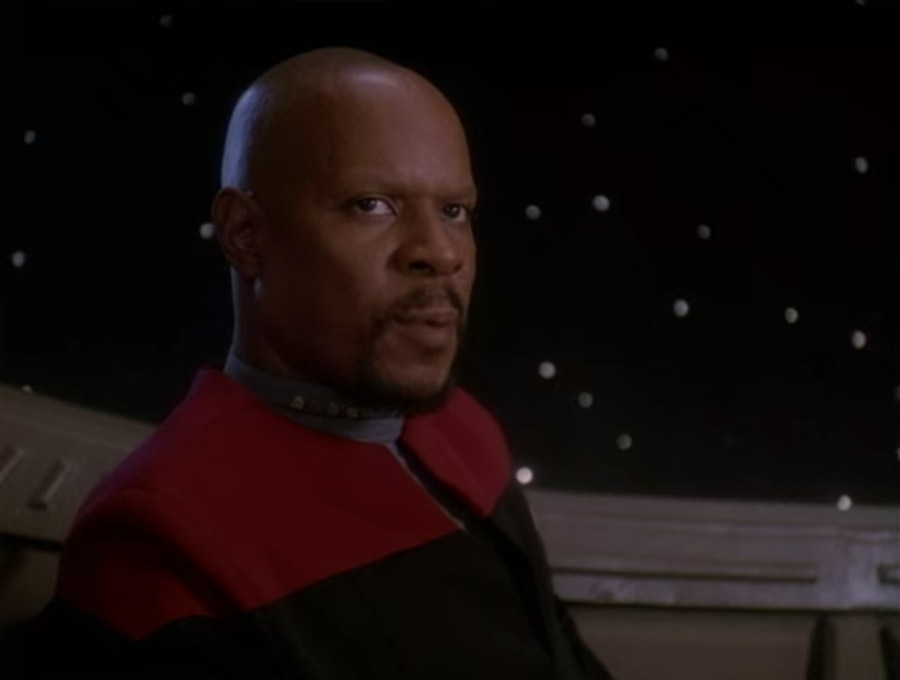
- It’s crazy that Bashir agrees to do this shit to Kurn. There’s a perfunctory scene where he asks Worf “Do you really, really want to do this for serious dawg?” (actual quote, don’t question me), but it’s kind of limp. Does Starfleet Medical honor the “elder brother says so” Klingon legal clause? I feel that could be abused in some hilarious ways.
- Upon waking up in the beginning of the episode, Kurn gives Worf some shit about the comfort of his quarters, to which Worf replies, “They serve me.” This is a nice callback to their similar dialogue in “Sins of the Father.”
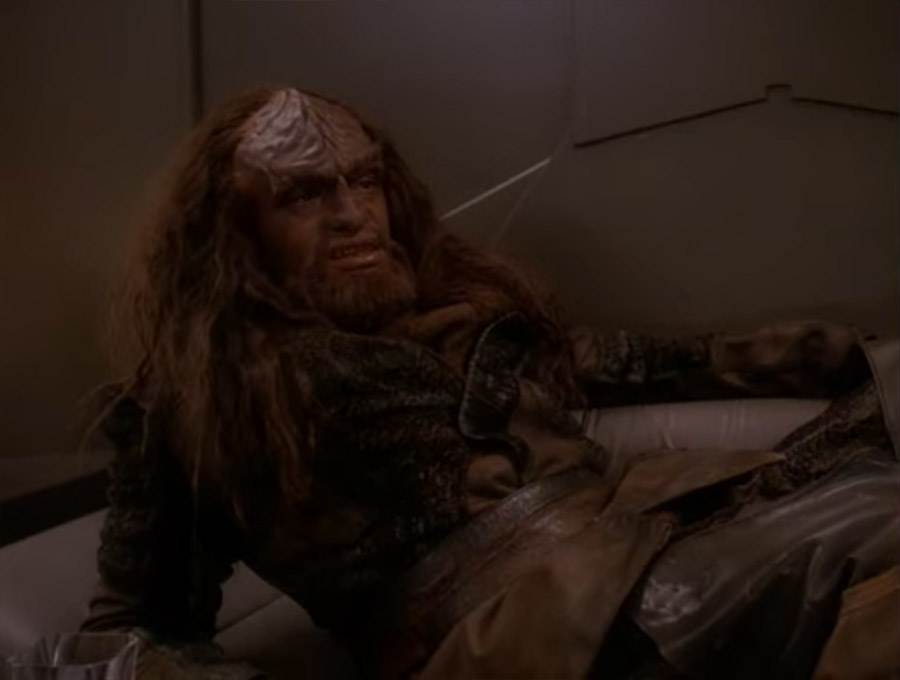
- Worf would of course join Martok’s house in a couple years, which renders this episode’s conclusion that much more tragic and unfortunate. I think it would have been worth it to bring back Kurn’s character. The writers even bother to give some wiggle room about Kurn’s memories being “nearly” impossible to restore.
- Even though Dax interferes with the ritual, Worf doesn’t hold it against her, which is decent of him. She becomes his confidant in the episode and they have a very flirty battle in the opener, which foreshadows their eventual relationship.
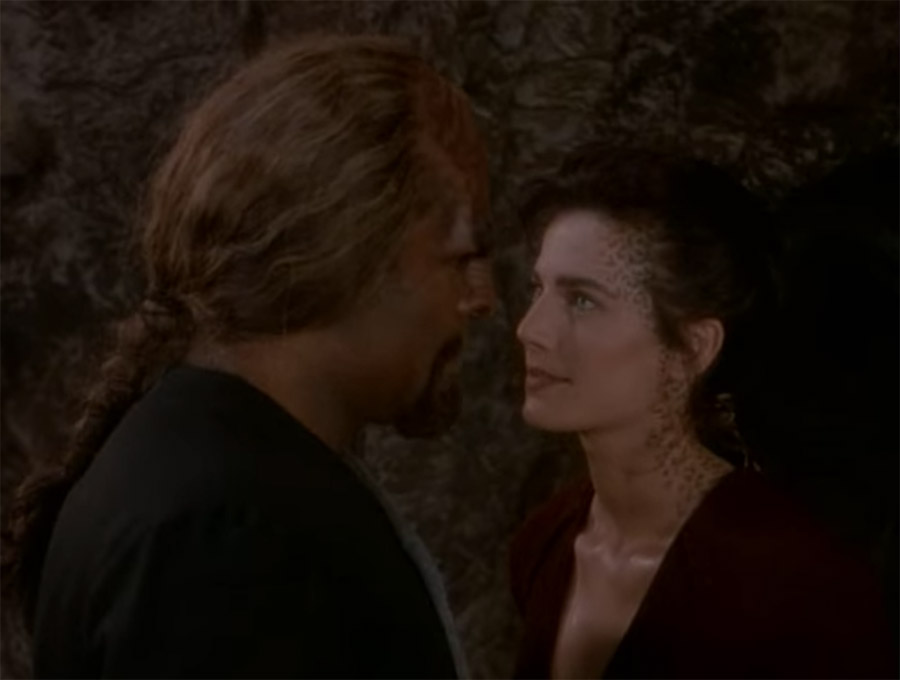
- There’s an uncomfortable similarity to the Voyager episode “Tuvix,” in that a character is medically/technologically murdered in both. As ghastly as this episode may be, it doesn’t begin to compare to that one…
- There’s remarkably no fallout from that Klingon officer getting killed while the ship is docked at a Starfleet base. Shit happens, I guess?
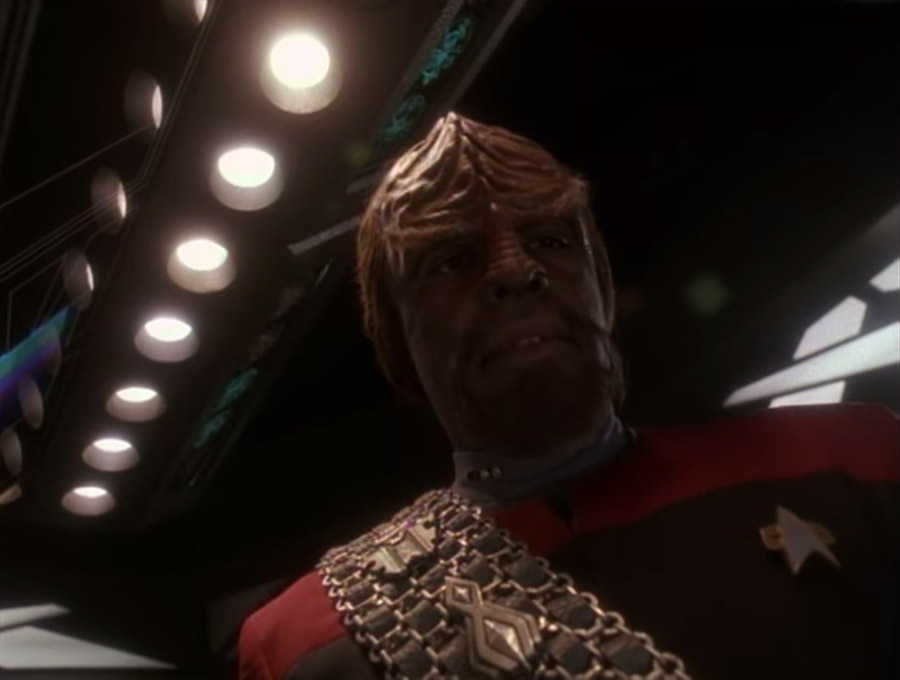
- I liked this shot. The episode uses some interesting and exaggerated angles for some scenes.